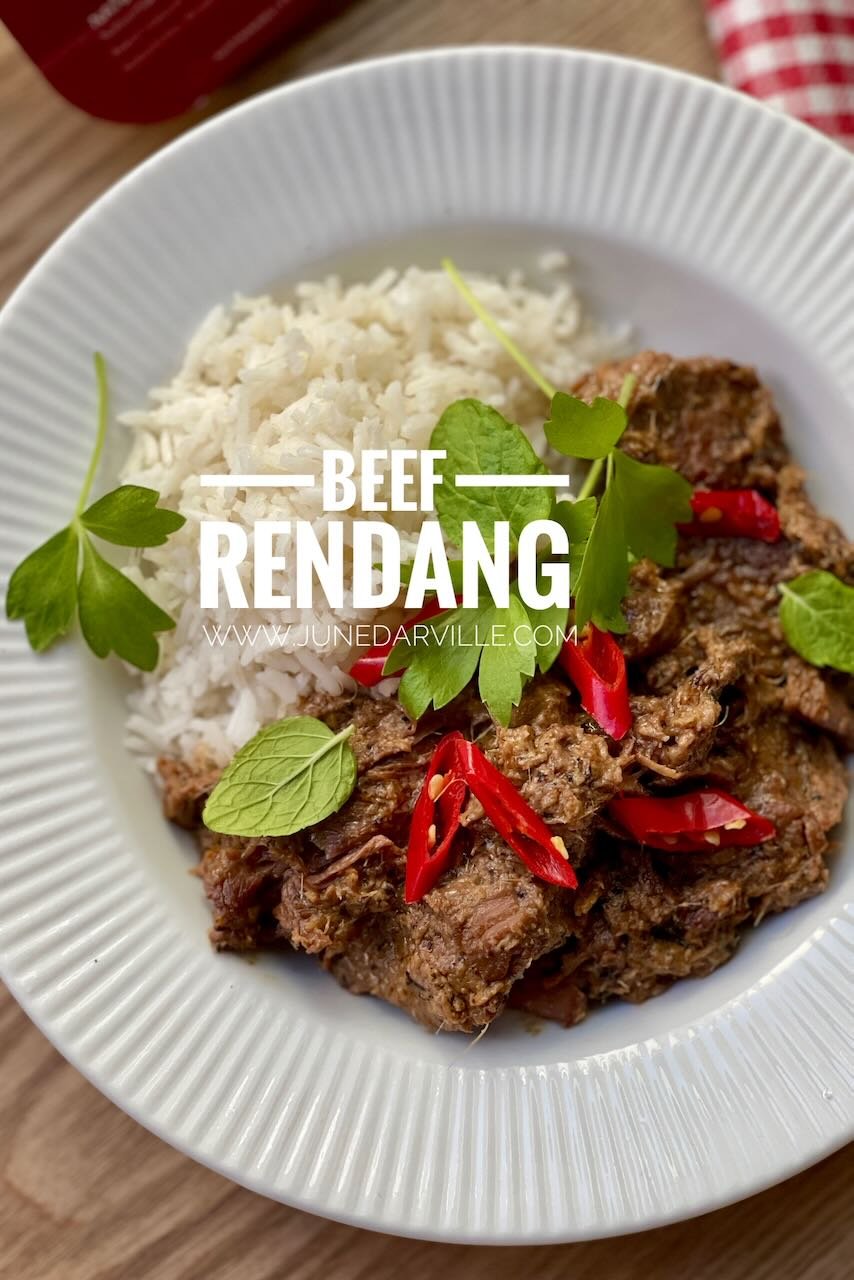
 Traditional Indonesian beef rendang: tender slow‑cooked beef in a rich, dry-style coconut curry. Authentic flavor, simple method, perfect with steamed rice.Beef rendang is one of Indonesia’s most iconic dishes — a slow‑cooked, dry‑style coconut beef curry that’s rich, aromatic, and deeply spiced. If you want to understand how traditional rendang is made, this guide gives a great overview.
This version stays true to the traditional flavor profile: toasted coconut, fragrant lemongrass, galangal, kaffir lime leaves, and a long simmer that turns beef into something unbelievably tender. The sauce slowly reduces until it clings to the meat in a deep, caramelized coating.
While beef rendang is famous for its complexity, it is surprisingly approachable at home. Most of the work happens in the blender and the pot; the rest is slow cooking and letting the flavors develop. Serve it with steamed rice and fresh herbs, and you’ve got a dish that tastes like it simmered all day — because it did.
This is the kind of recipe you make once and immediately add to your forever rotation.
Enjoy!
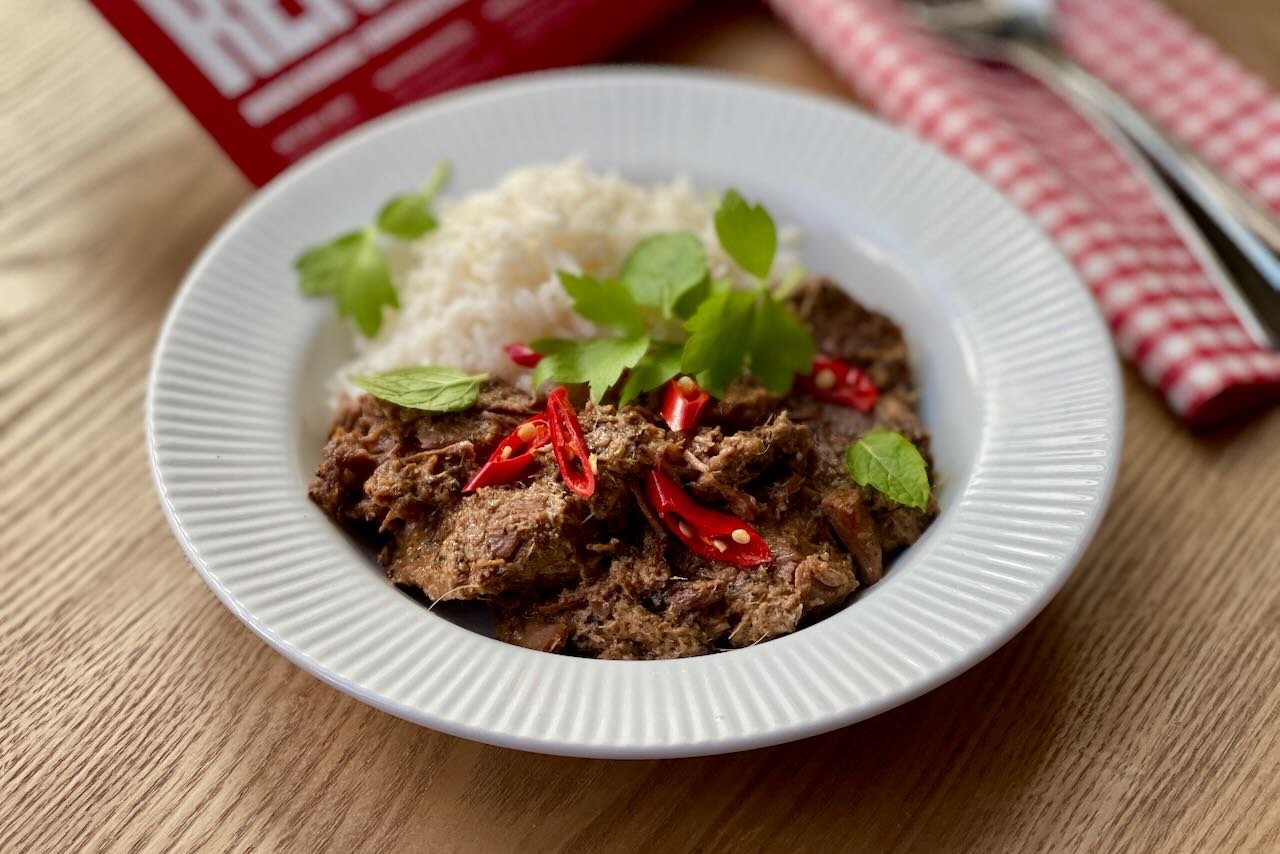
Easy Beef Rendang (Easy Indonesian Coconut Beef Curry)
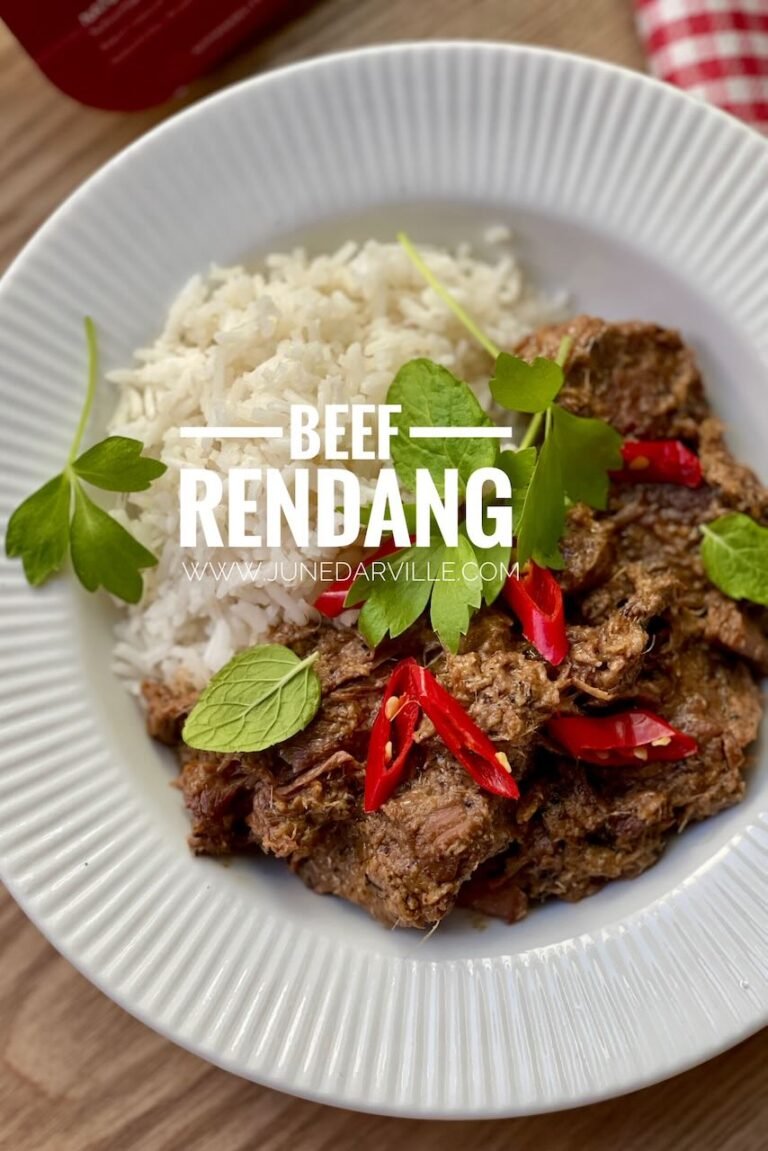
- 2 lbs beef chuck (900 g) cut into large chunks
- 2 tbsp neutral oil
- 1 tsp salt
- 6 shallots
- 4 cloves garlic
- 1 to 2 red chilies or more for heat
- 1 inch piece fresh ginger (2,5 cm)
- 1 inch piece fresh galangal (2,5 cm)
- 2 lemongrass stalks white part only
- 1 tsp ground turmeric
- 1 tsp ground coriander
- 1 can full-fat coconut milk (14 oz / 400 ml)
- 1 cup water (240 ml)
- 3 kaffir lime leaves
- 2 Indonesian bay leaves (or regular bay leaves)
- 1 cinnamon stick
- 1 tbsp tamarind paste
- 1 tbsp palm sugar or brown sugar
- ½ cup unsweetened shredded coconut (40 g)
- Blend shallots, garlic, chilies, ginger, galangal, lemongrass, turmeric, and coriander into a smooth paste. Add a splash of water if needed.
- Heat oil in a large pot. Add the beef, season with salt, and sear until lightly browned on all sides. Remove and set aside.
- In the same pot, add the spice paste. Cook for 5–7 minutes until fragrant and slightly darker.
- Return the beef to the pot. Add coconut milk, water, kaffir lime leaves, bay leaves, cinnamon, tamarind, and sugar. Stir well.
- Bring to a gentle simmer. Cook uncovered for 2–2½ hours, stirring occasionally, until the liquid reduces and thickens.
Stir in the shredded coconut. Continue cooking until the sauce becomes thick, glossy, and clings to the beef — almost dry.
- Taste and adjust salt or sweetness. Remove the cinnamon stick and bay leaves before serving.
If you love bold, slow‑cooked curries, try my spicy pork rib curry next — it’s fall‑off‑the‑bone tender and packed with flavor.
Notes
Choosing the right cut of beef
Beef chuck is the classic choice because it has enough fat and connective tissue to stay tender during long cooking. You can also use brisket or boneless short ribs for an even richer result. Lean cuts like round or sirloin will dry out and aren’t recommended for rendang.
Why browning matters
Searing the beef adds depth and caramelization that you can’t get later in the cooking process. Don’t skip this step — it builds the base flavor that makes rendang so complex.
Coconut milk quality
Use full‑fat coconut milk only. Light coconut milk won’t reduce properly and can cause the sauce to split. If you want an even richer finish, replace ¼ cup of the coconut milk with coconut cream.
Kerisik (toasted coconut)
This is essential for traditional rendang. Toasting the coconut until golden brings out a nutty, caramelized flavor that thickens the sauce and gives rendang its signature depth. If you can find fresh grated coconut, it’s even better.
Spice paste texture
Blend the paste as smooth as possible. A grainy paste won’t cook evenly and can burn before the beef is tender. Add a tablespoon of water at a time if your blender needs help.
Heat level
Traditional rendang is moderately spicy. If you want it hotter, add extra red chilies or a small amount of Thai chili. If you prefer mild, remove the seeds or use milder chilies like Fresno.
Cooking time
Rendang is ready when the sauce is thick, glossy, and clings to the beef. If it still looks saucy, keep going — the last 20–30 minutes are where the magic happens.
Aromatics
Kaffir lime leaves and galangal are key to the authentic flavor. If you can’t find them fresh, frozen versions work beautifully and are often more fragrant.
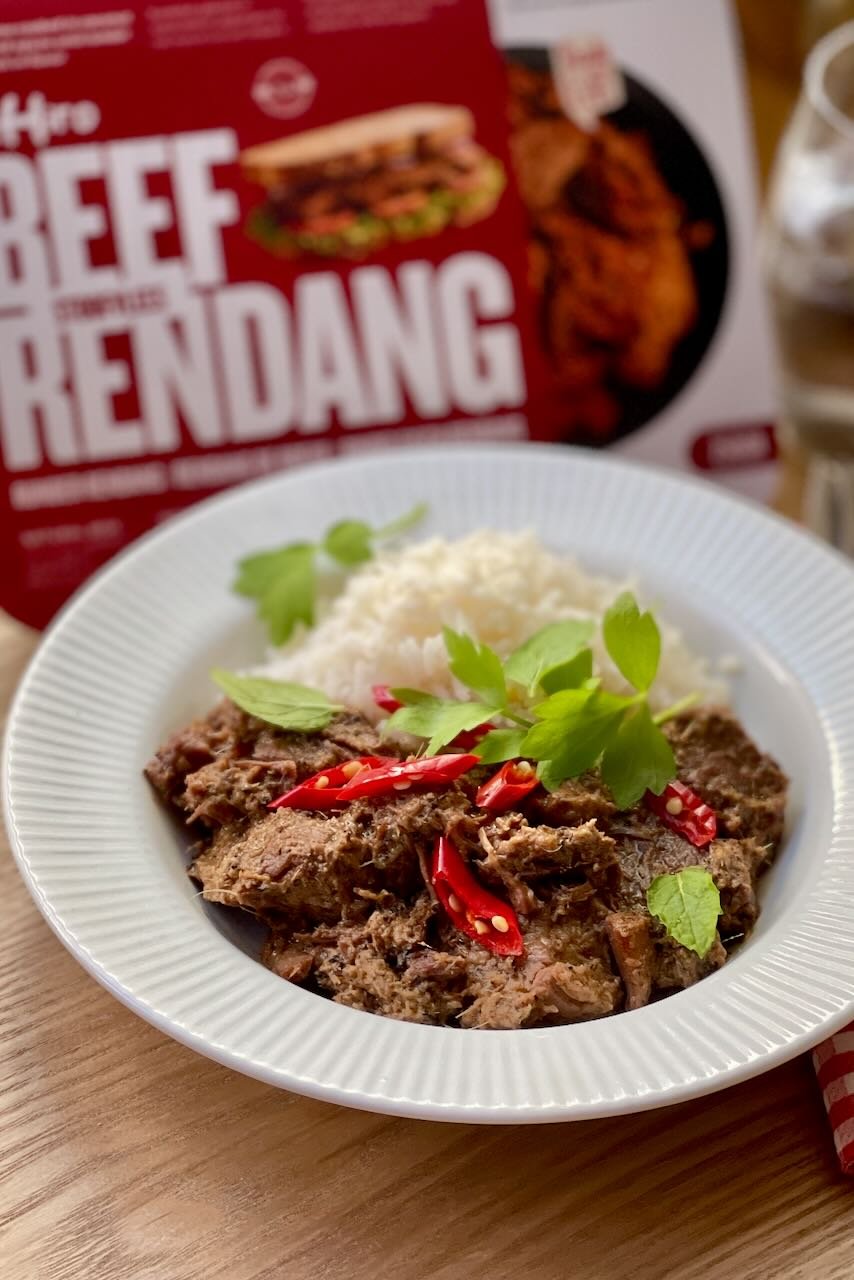
Storage
Refrigerator
Store rendang in an airtight container for 4–5 days. The flavors deepen as it rests, so it often tastes even better on day two or three.
Freezer
Rendang freezes exceptionally well because it’s a dry-style curry. Freeze for up to 3 months in portioned containers or freezer bags. Thaw overnight in the fridge.
Reheating
Warm gently in a pan over low heat. Add 1–2 tablespoons of water or coconut milk if it looks too dry. Avoid microwaving on high — it can cause the coconut to split.
Meal prep tip
Rendang is perfect for batch cooking. Make a double batch and freeze half for quick weeknight dinners.
FAQ
Is beef rendang supposed to be dry or saucy?
Traditional rendang is a dry-style curry. The liquid slowly reduces until the coconut milk caramelizes and coats the beef in a thick, rich paste. If your rendang is still saucy, keep cooking — it needs time to concentrate.
Can I make beef rendang in a slow cooker?
Yes. Cook on LOW for 6–7 hours or HIGH for 4–5 hours. After that, transfer it to a pot on the stove and simmer uncovered for 20–30 minutes to reduce the sauce properly. Slow cookers don’t evaporate enough liquid on their own.
Can I make beef rendang in an Instant Pot?
Yes. Pressure cook for 45 minutes, then switch to sauté mode and reduce the sauce until thick and glossy. Stir often to prevent sticking.
Can I substitute chicken or pork?
Yes. Chicken thighs work well and cook in about 45–60 minutes. Pork shoulder is also excellent and cooks in 1½–2 hours. Keep the same spice paste and aromatics.
Why did my coconut milk split?
This usually happens if the heat is too high early in the cooking process or if you used light coconut milk. Keep the pot at a gentle simmer and stir occasionally.
Can I make beef rendang ahead of time?
Absolutely — rendang is one of the best make-ahead dishes. The flavors deepen overnight, and the texture improves as the sauce thickens.
What do I serve with beef rendang?
Steamed jasmine rice is classic. You can also serve it with cucumber slices, fresh herbs, pickled vegetables, or a simple green salad to balance the richness.