Trekkers in Nepal eat mostly at teahouses, and the backbone of every menu is dal bhat: steamed rice, lentil soup, a vegetable curry and a sharp pickle, served with free refills. Around it sit Tibetan bread, potato dishes, noodle soups, momos and Sherpa stew, with prices rising the higher and more remote the village.
On a route like the Manaslu Circuit, food changes from rice terraces to Tibetan-style highland kitchens within a single week. This guide covers what appears on the plate, what it costs, and how to cook a proper dal bhat recipe at home.
Key Takeaways
- Dal bhat is the most filling and best-value meal on any trail, thanks to unlimited refills.
- Food prices climb with altitude: a plate costing NPR 350 in Kathmandu can reach NPR 1,000 to 1,200 near 4,500 m.
- Sherpa stew, Tibetan bread and potato pancakes are local specialties worth ordering above 3,500 m.
- Meat is carried up by porters or animals, so vegetarian meals are fresher and safer at high camps.
- Dal bhat can be made at home with lentils, rice, seasonal vegetables and a few Nepali spices.
Why Is Dal Bhat the Main Meal on Nepal Treks?
Dal bhat delivers carbohydrates, protein and warmth in one plate, which is exactly what a body needs after six or seven hours of walking. Refills of rice, lentils and curry are included, so one order can power an entire afternoon on the trail.
Guides and porters eat it twice a day. The local saying “dal bhat power, 24 hour” sums up its reputation better than any nutrition label.
What Food Is Served in Teahouses Along the Trail?
Teahouse menus look similar across regions, built around ingredients that store well and travel by mule or porter.
| Meal | Common Options |
| Breakfast | Tibetan bread with honey, porridge, chapati, eggs, muesli with hot milk |
| Lunch | Fried rice, noodle soup, momos, potato curry, dal bhat |
| Dinner | Dal bhat, Sherpa stew, pasta, pizza (yak cheese at higher villages) |
| Drinks | Ginger lemon honey tea, masala tea, black tea, hot lemon, butter tea |
Western dishes like pizza and spaghetti exist, but they are adapted to local supplies. Ordering local dishes guarantees a better meal and keeps kitchen waste down.
How Does Food Change on the Manaslu Route?
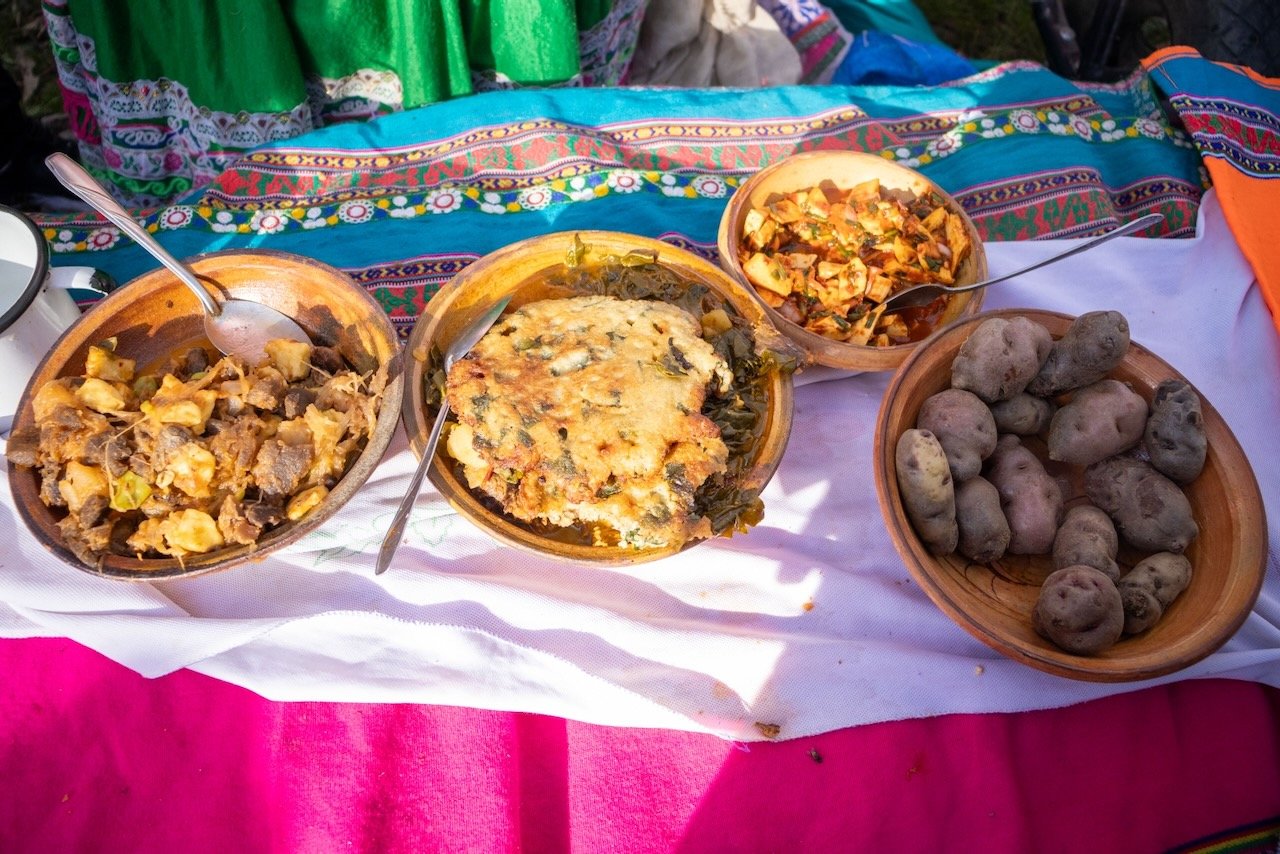
The lower trail passes through Gurung villages where fresh greens, millet and buckwheat bread appear on the table. Above Namrung, the culture turns Tibetan, and tsampa (roasted barley flour), salted butter tea and thick noodle soups take over.
In Samagaon and Samdo, buckwheat pancakes and yak cheese are standouts. Supplies arrive by mule, so expect a smaller menu and higher prices near Larkya La.
What Do Trekkers Eat on the Way to the Gokyo Lakes?
Sherpa kitchens shape the food on the trail to the Gokyo Lakes, where potatoes are the local staple. Two dishes deserve a spot on every itinerary:
- Shyakpa (Sherpa stew): a thick soup of hand-torn dough, potatoes, radish and greens, ideal after a cold day near Machhermo.
- Rikikur: a crisp potato pancake served with yak butter or local cheese, a favorite in Dole and Gokyo village.
Above 4,700 m, a plate of dal bhat in Gokyo costs around NPR 1,000 to 1,200. Boiled potatoes with chili salt make a cheap, filling snack at most lodges.
How Much Does Food Cost on a Nepal Trek?
Prices are fixed by local lodge committees and rise as supply lines get longer.
| Item | Kathmandu | Mid-Altitude (2,500 to 3,500 m) | High Altitude (4,000 m+) |
| Dal bhat | NPR 350 to 450 | NPR 650 to 850 | NPR 950 to 1,200 |
| Tibetan bread | NPR 150 | NPR 350 to 450 | NPR 500 to 650 |
| Pot of ginger tea | NPR 200 | NPR 500 to 700 | NPR 800 to 1,100 |
| Boiled water (1 L) | Free to NPR 50 | NPR 150 to 250 | NPR 300 to 500 |
Budgeting USD 30 to 40 per day for food covers three meals and hot drinks on most routes.
Is Meat Safe to Eat at High Altitude?
Slaughtering animals is not practiced in many Buddhist highland villages, so meat is carried up from lower valleys over several days. Without refrigeration, the risk of stomach trouble rises with every day on the trail.
Most guides recommend a vegetarian diet above 3,000 m. Eggs, cheese, lentils and potatoes supply enough protein for the climb.
How Do You Make Nepali Dal Bhat at Home?
This recipe serves four and recreates the teahouse plate: dal, rice, vegetable tarkari and tomato achar.
Ingredients
For the dal:
- 1 cup yellow lentils (moong or masoor), rinsed
- 4 cups water
- ½ tsp turmeric
- 1 tsp salt
- 2 tbsp ghee
- 1 tsp cumin seeds
- 3 garlic cloves, sliced
- 1 tsp grated ginger
- A pinch of jimbu (Himalayan dried herb) or a pinch of dried chives
For the tarkari:
- 2 potatoes, cubed
- 1 small cauliflower, cut into florets
- 1 onion, chopped
- 1 tsp cumin powder, 1 tsp coriander powder, ½ tsp turmeric
- 2 tbsp oil, salt to taste
For the achar:
- 3 tomatoes, roasted until charred
- 2 garlic cloves, 1 green chili
- ¼ tsp timur (Sichuan pepper), salt, fresh coriander
To serve: 2 cups basmati or jasmine rice, cooked.
Method
- Cook the lentils: simmer lentils with water, turmeric and salt for 25 to 30 minutes until soft. Whisk to a smooth soup.
- Temper the dal: heat ghee, fry cumin seeds, garlic, ginger and jimbu until golden, then pour the sizzling mix into the dal.
- Make the tarkari: fry onion in oil, add spices, then potatoes and cauliflower with a splash of water. Cover and cook for 15 minutes.
- Blend the achar: pound or blend roasted tomatoes with garlic, chili, timur and salt. Finish with coriander.
- Plate it like a teahouse: rice in the center, dal in a bowl, tarkari and achar at the side, plus a few slices of raw cucumber or radish.
Timur gives the achar its tingling, citrusy kick. Without it, the dish tastes good but misses the mountain character.
What Food Should Trekkers Pack From Home?
Teahouses cover main meals, but snacks keep energy up between villages. Useful items include:
- Nuts, dried fruit and trail mix
- Energy bars and chocolate (cheaper in Kathmandu than on the trail)
- Electrolyte sachets for rehydration
- Instant soup sachets for cold evenings
Packing out all wrappers keeps the trails clean for the next group.
Why Is Trail Food Part of the Himalayan Experience?
Food on a Nepal trek does more than fuel the climb. Each plate reflects the valley it comes from: Gurung millet bread in the lower hills, Tibetan tsampa near the passes, and Sherpa stew beside glacial lakes. Ordering local dishes supports the families who run the teahouses, keeps supply loads lighter, and gives trekkers a taste of mountain life that no photo can capture.
Back home, a plate of dal bhat with fiery timur achar brings those trail memories straight to the kitchen table. Whether the next adventure is a high pass in Gorkha or a turquoise lake in the Khumbu, arriving hungry and curious about the food makes the journey richer at every stop.