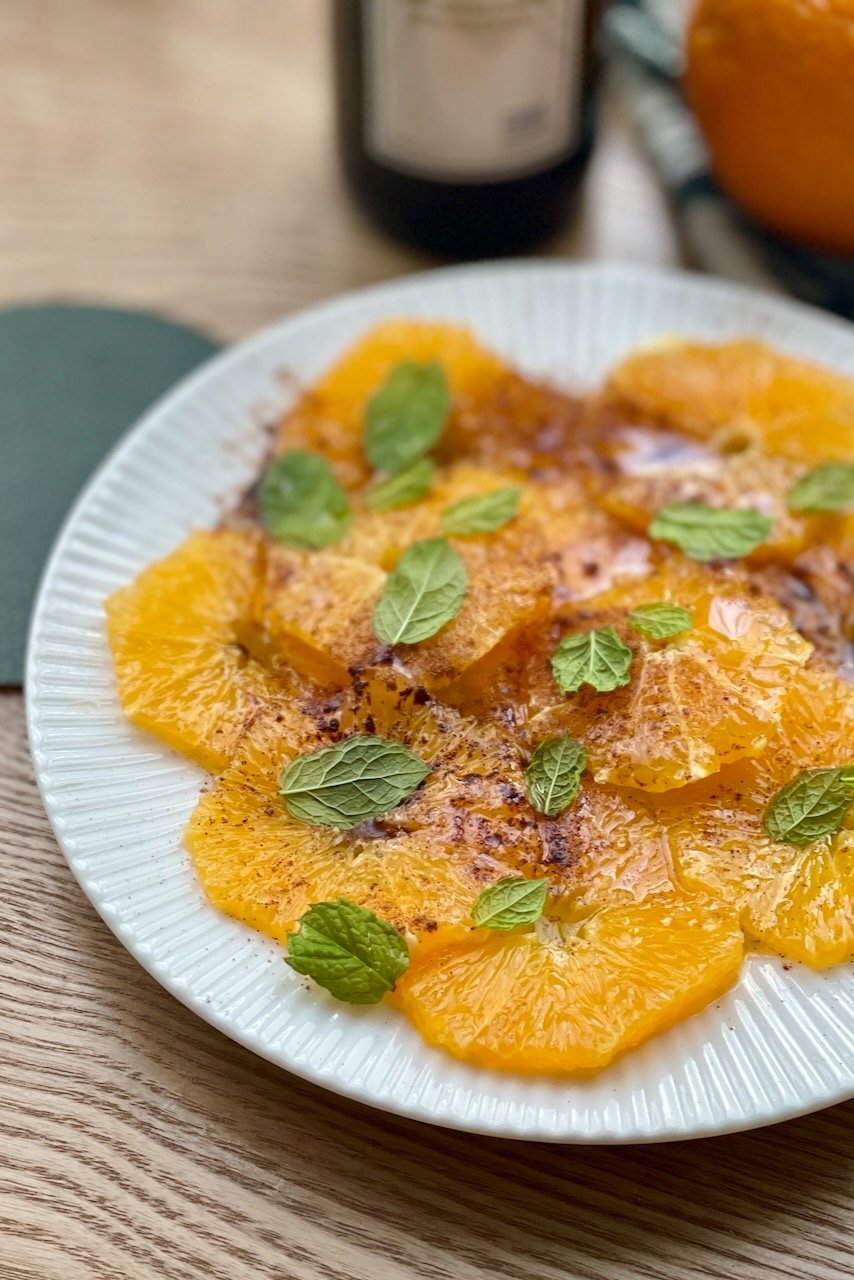
 A bright, no‑bake Mediterranean orange carpaccio made with fresh oranges, Greek olive oil, cinnamon, rock salt and mint. Ready in ten minutes.
This Mediterranean orange carpaccio is the kind of dessert that proves how little you need to make something feel special. Thin slices of juicy oranges, a glossy drizzle of Greek ToPlousio extra‑virgin olive oil, a whisper of cinnamon, a pinch of rock salt, and fresh mint.
It’s bright, elegant, and ready in ten minutes — the perfect no‑bake citrus dessert for warm evenings, lazy Sundays, or last‑minute dinner guests.
What makes this Mediterranean orange carpaccio recipe so modern?
It leans into everything people love in 2026: whole ingredients, Mediterranean flavors, olive‑oil desserts, and fresh citrus plates that look restaurant‑chic without any effort.
It’s simple, photogenic, and quietly luxurious.
Enjoy!
Mediterranean Orange Carpaccio (Fresh Citrus Carpaccio Dessert)
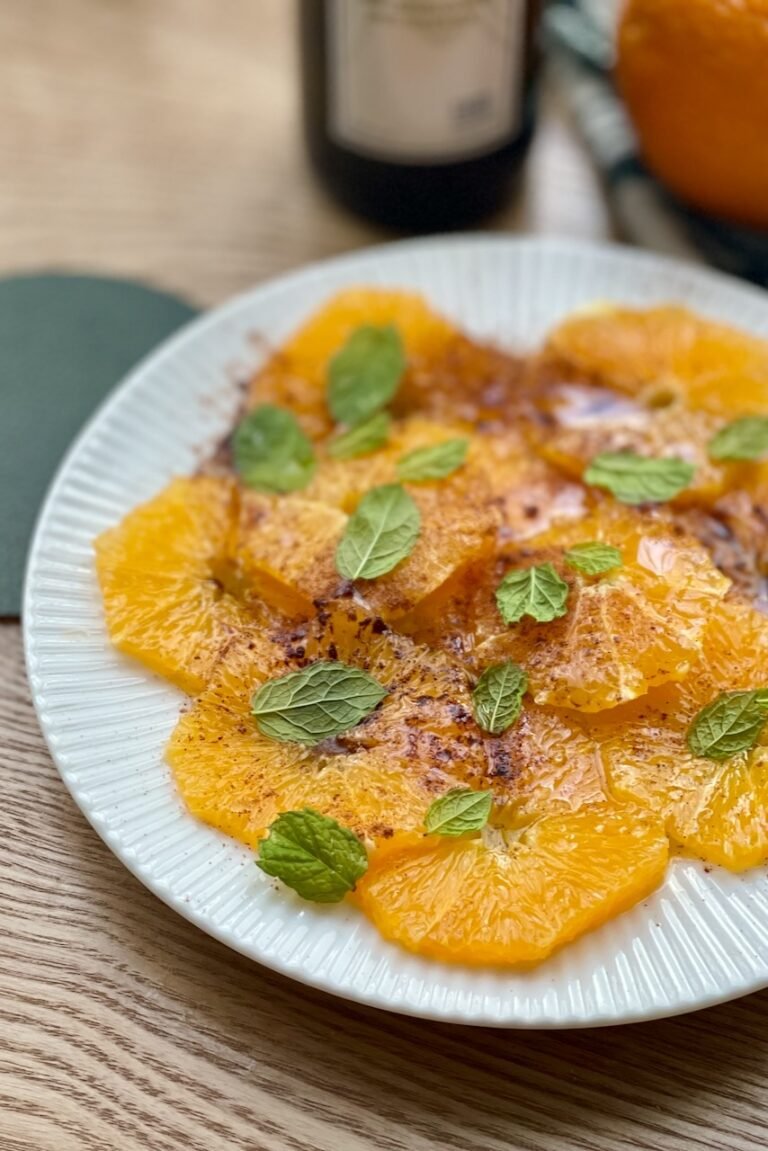
A bright, no‑bake Mediterranean orange carpaccio made with fresh oranges, Greek olive oil, cinnamon, rock salt and mint. Ready in ten minutes.
- 2 large oranges (navel, Cara Cara, or blood orange)
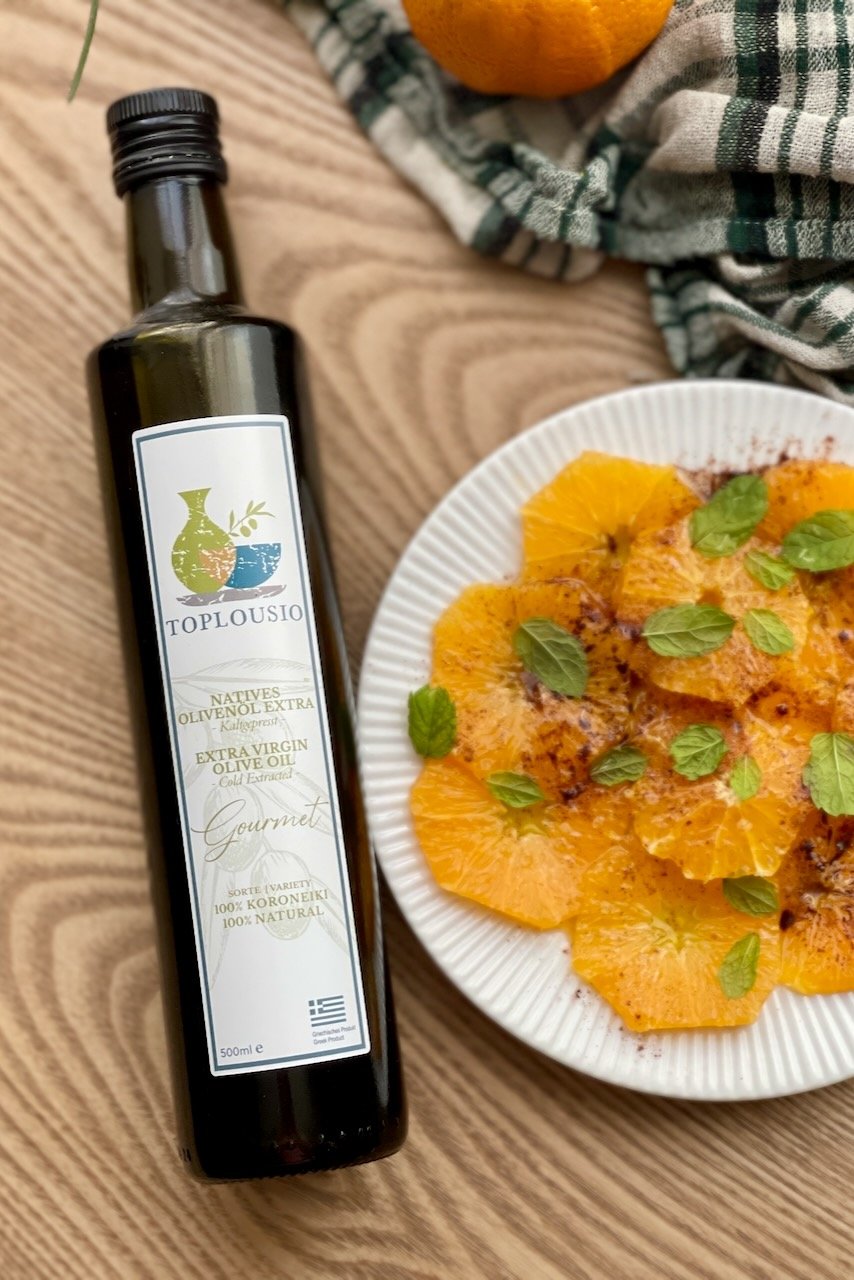
- 2 tbsp Toplousio Greek extra‑virgin olive oil
- a pinch ground cinnamon
- a pinch rock salt or flaky sea salt
- fresh mint leaves to finish
1) Slice off the top and bottom of each orange.
2) Stand the orange upright and remove the peel in vertical strips.
3) Trim away any remaining white membrane.
4) Slice the oranges horizontally into thin rounds (2–3 mm).
5) Arrange the slices slightly overlapping on a cold plate.
6) Drizzle with Greek olive oil.
7) Dust lightly with cinnamon.
8) Add a small pinch of rock salt.
9) Finish with fresh mint leaves and serve immediately.

Use a sharp knife for clean, even slices.
Blood oranges add beautiful colour when in season.
Add a splash of orange blossom water for a floral twist.
For a more indulgent dessert, serve with a spoonful of mascarpone or Greek yogurt.
Craving a baked citrus dessert? My orange vanilla cake is the perfect next stop.
Why This Mediterranean Orange Carpaccio Works
This dessert is all about contrast and balance.
The oranges bring natural sweetness and acidity. The Greek EVOO adds silkiness and a fruity, peppery depth. Cinnamon warms everything up, rock salt sharpens the flavors, and mint lifts the whole plate with freshness. Together, they create a dish that feels both ancient and modern — a nod to Mediterranean simplicity with a clean, contemporary look.
It’s also a dessert that fits almost any moment: after a heavy dinner, as a refreshing afternoon treat, as part of a brunch spread, or even as a light starter.
This Mediterranean orange carpaccio is flexible, fast, and always impressive.
Ingredient Notes
Oranges: Choose firm, juicy oranges. Navel oranges are classic, but Cara Cara or blood oranges add colour and complexity.
Greek Extra‑Virgin Olive Oil: Toplousio EVOO is ideal — fruity, peppery, and silky. A good olive oil transforms this dish from simple to elegant.
Cinnamon: Freshly ground cinnamon gives warmth and depth.
Rock Salt: Adds crunch and contrast. Maldon flakes or Greek sea salt work beautifully.
Mint: Fresh mint leaves brighten the plate and add a cooling note.
How to Slice Oranges for Carpaccio
The beauty of this dish lies in the thin, even slices.
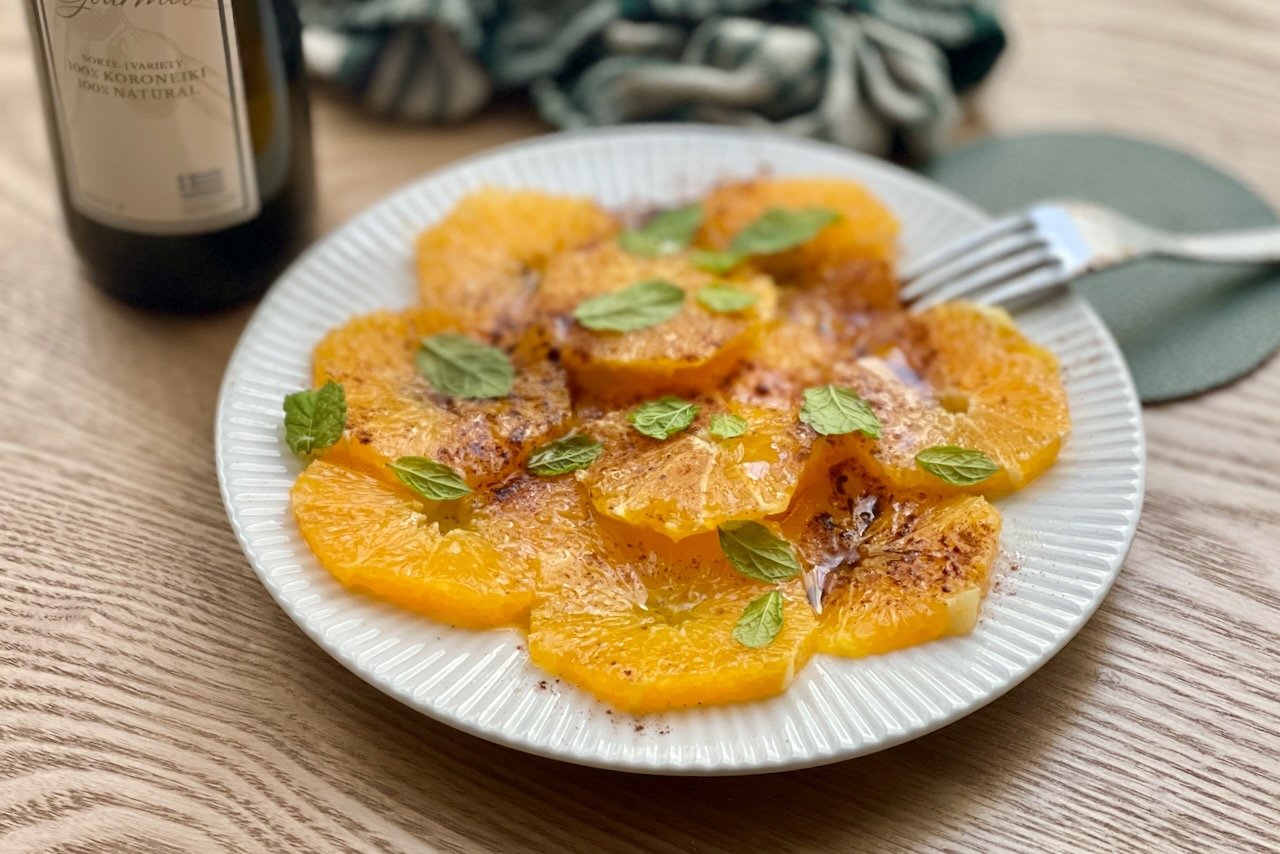
Cut off both ends, remove the peel in vertical strips, clean off the membrane, and slice horizontally into thin rounds. Arrange them slightly overlapping on a cold plate — the cold surface keeps the citrus vibrant and crisp.
Varitions
Mediterranean Basil Version:
Swap mint for basil and add a drizzle of honey.
Spiced Winter Version:
Add a pinch of cardamom or star anise.
Summer Citrus Mix:
Combine oranges with grapefruit, pomelo, or blood orange.
Dessert Upgrade:
Serve with a quenelle of mascarpone or Greek yogurt.
Savory Twist:
Add black pepper and serve alongside grilled halloumi.
Storage & Make‑Ahead Tips
Slice oranges up to 4 hours ahead and keep covered in the fridge.
Add olive oil, cinnamon, and salt just before serving.
Mint should be added at the very last moment.
Leftovers keep for 24 hours, though the texture softens.
Mediterranean orange carpaccio – FAQ’s
Can I use other citrus?
Yes — grapefruit, blood orange, and pomelo all work beautifully and add extra colour and complexity. Just keep in mind that each citrus has a different balance of sweetness and bitterness, so the final flavour will shift slightly in a lovely, seasonal way.
Does the olive oil matter?
Absolutely. A good Greek EVOO adds fruitiness, pepperiness, and a silky finish that makes the oranges taste more luxurious. Lower‑quality oils tend to taste flat or greasy, so using a premium one like Toplousio genuinely elevates the entire dish.
Is this dessert vegan?
Yes — it’s naturally vegan and gluten‑free, which makes it a great option when you’re hosting guests with different dietary needs. It’s also a refreshing alternative to heavier plant‑based desserts that rely on coconut cream or nut milks.
Can I add nuts?
Crushed pistachios or almonds add great texture and a bit of richness. They also make the plate look more festive, especially if you’re serving this as part of a larger Mediterranean spread.
Can I serve this as a starter?
Definitely. Add black pepper and a few basil leaves for a savoury twist, and it becomes a bright, refreshing opener that wakes up the palate. It pairs beautifully with grilled halloumi, seafood, or anything with lemon.
How thin should the slices be?
Aim for around 2 to 3 mm — thin enough to look elegant, but thick enough to hold their shape on the plate. Uniform slices also help the carpaccio fan out beautifully, which makes the dish instantly more photogenic.
Can I prep this for a dinner party?
Yes. Slice the oranges ahead and store them covered in the fridge, then assemble everything just before serving. This keeps the citrus fresh and lets you plate the dish in minutes while still looking effortlessly polished.
Serving Suggestions
- Pair with a crisp Greek white wine.
- Serve after rich mains like lamb, duck, or pasta.
- Add vanilla gelato for indulgence.
- Plate as a starter with a drizzle of chili oil.
- Serve on a large platter for a dramatic table moment.
The Mediterranean Tradition Behind Orange Carpaccio
Orange carpaccio may look modern and minimalist, but it’s rooted in a long Mediterranean tradition of serving fresh citrus with olive oil, herbs, and spices.
In Greece, Crete, and parts of southern Italy, citrus has always been treated as both a fruit and a seasoning — something that can brighten savory dishes or stand alone as a refreshing dessert. The combination of oranges and extra‑virgin olive oil is especially meaningful: it reflects the region’s focus on whole ingredients, natural sweetness, and healthy fats. Cinnamon adds warmth, mint adds freshness, and a pinch of rock salt sharpens every flavor on the plate.
This style of dessert fits perfectly into the growing interest in Mediterranean diet recipes, no‑bake citrus desserts, and olive‑oil‑based sweets. It’s light, nutrient‑dense, and visually striking — exactly the kind of dish people search for when they want something simple, elegant, and rooted in real culinary heritage. This makes Mediterranean orange carpaccio not just delicious, but also highly relevant for modern home cooks.
This Mediterranean orange carpaccio is fresh, elegant, and perfectly tuned for the summer. It’s a dessert that celebrates citrus, olive oil, and the beauty of simple ingredients.