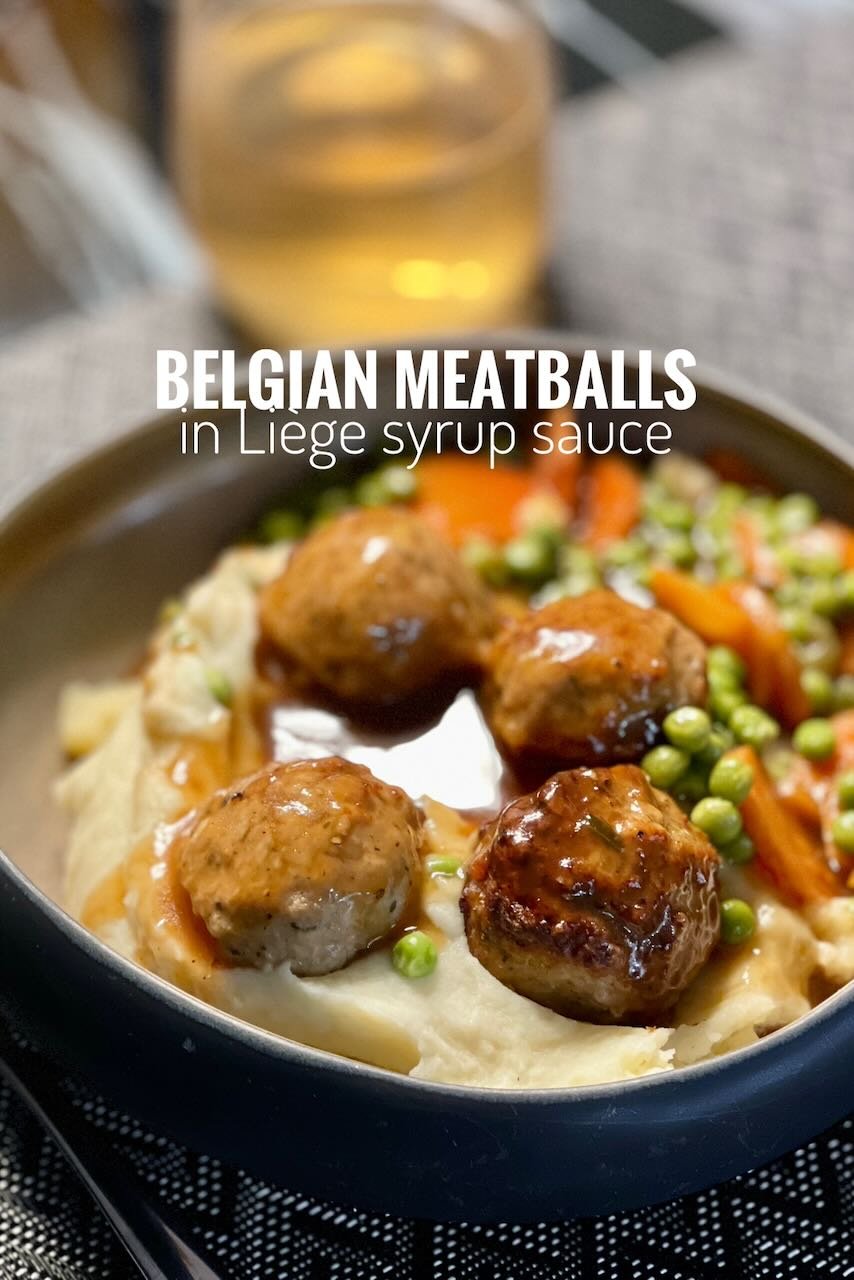
 Tender Belgian meatballs in a rich, sweet and sour Liège syrup sauce. A comforting, authentic Belgian classic with deep, fruity flavor.
There are dishes you grow up with, and then there are dishes you grow into.
Belgian meatballs in Liège syrup sauce belong firmly in the second category — the kind of comfort food that doesn’t shout for attention but wins you over with a slow, confident wink.
Some Belgian dishes don’t just have fans — they have loyalists.
And Belgian meatballs in Liège syrup sauce definitely fall into that category.
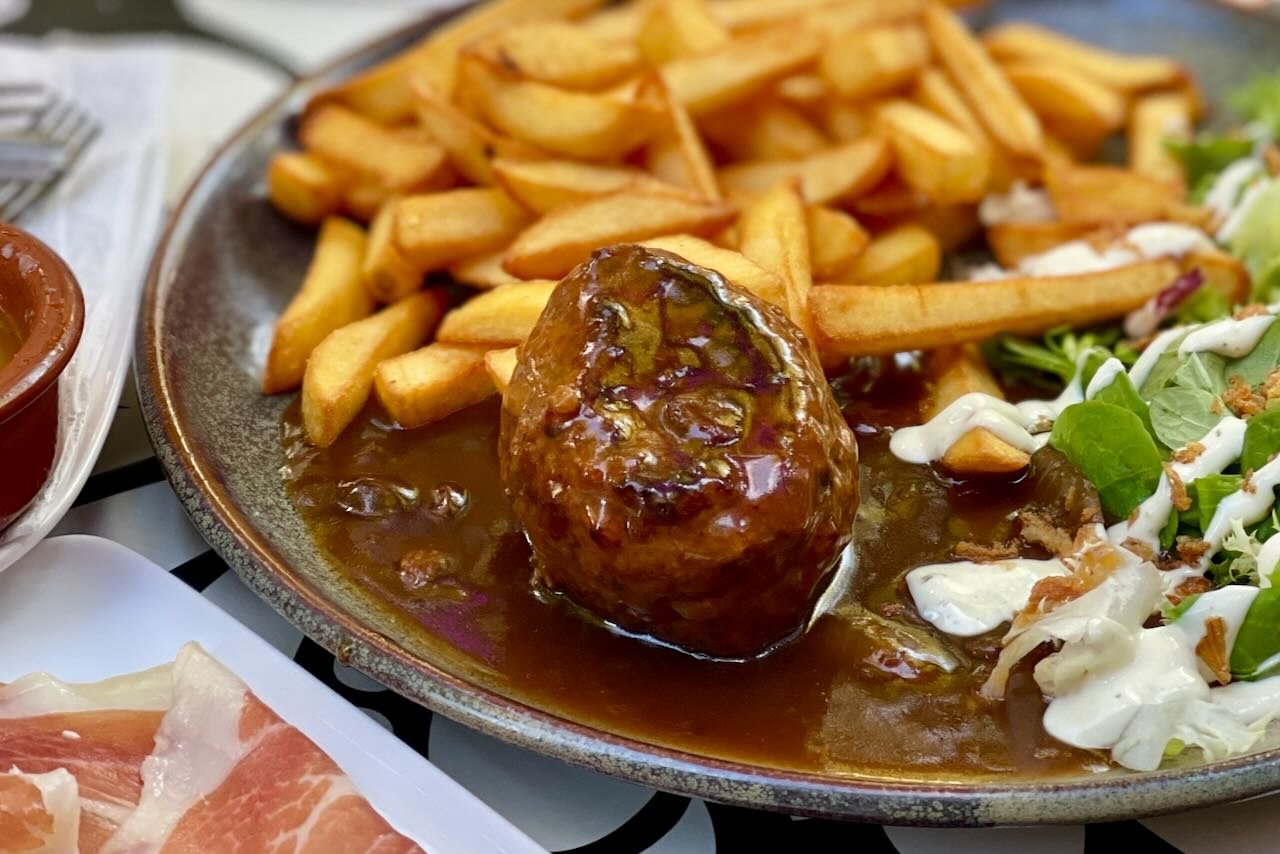
I learned this the hard way in a tiny brasserie in Liège, where the waiter didn’t ask if I wanted boulets, only whether I preferred one giant one or two giant ones, the traditional choice that quietly measures your appetite and your ambition.
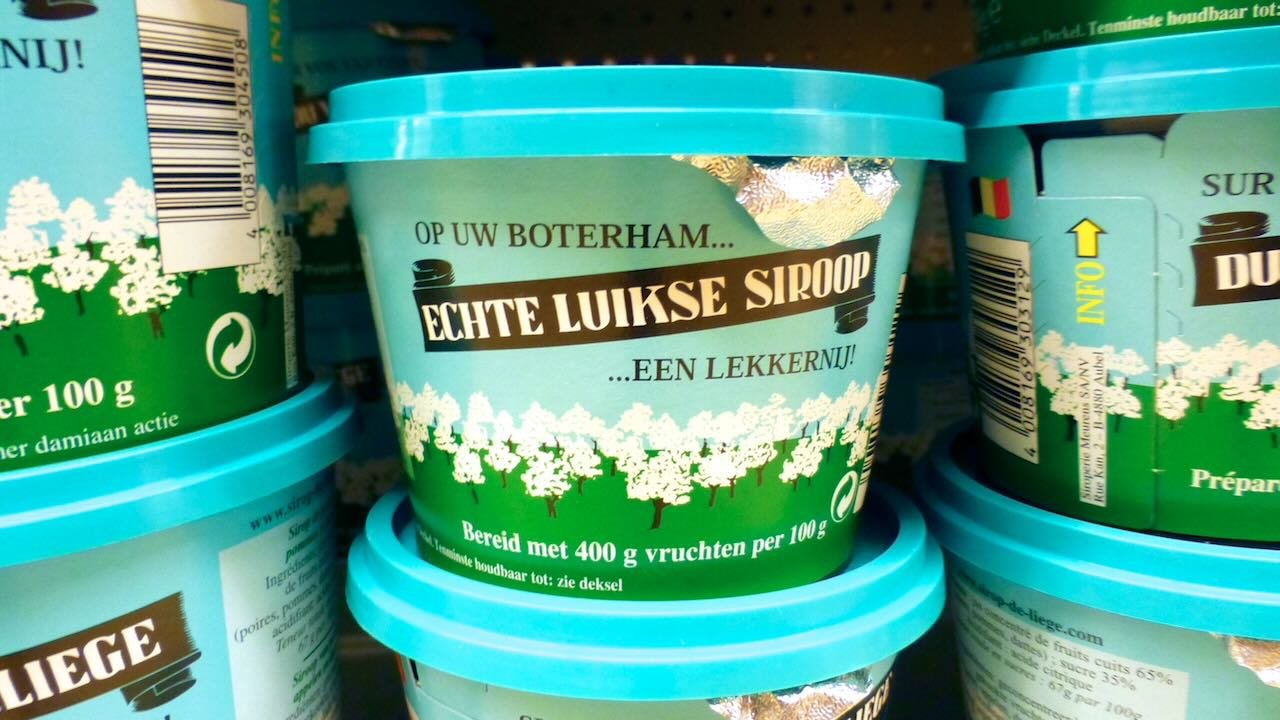
Luikse siroop/ Sirop de Liège
When the plate landed, those oversized meatballs were swimming in a dark, glossy sauce that smelled like apples, pears, onions and pure comfort.
One bite in and I finally understood why people from Liège guard their sauce recipe like family secrets — it is sweet, sour, savoury, sticky, and ridiculously satisfying.
At home, though, I take a small liberty: I make the meatballs smaller.
Not because I don’t love the classic brasserie style, but because on a weeknight I want them to cook through fast, brown beautifully and get dinner on the table before I lose momentum.
Same flavor, same soul — just a little more practical for real‑life cooking.
I also use this Liege syrup in my carbonnade flamande beef stew, check it out!
And if we are talking about Liege food, then I should also mention the iconic Liège salad with boiled potatoes, bacon and green beans!
Now wait a minute, another Liège treat is the Liege waffle!
There are 2 types of Belgian waffles: the Brussels waffle (rectangular, light and airy), and the Liege waffle (rustic, chewy and heavy). I wrote a short article about these waffles, you should read it!
Did you know that this Liege syrup sauce is also called ‘sauce lapin’ in French, or ‘rabbit sauce’? Why? I tell you all about that below the recipe!
So here’s my version of this Belgian classic.
Tender, juicy meatballs simmered in that iconic Liège syrup sauce, ready to turn an ordinary evening into something warm and deeply comforting.
I like to serve them with mashed potatoes and peas and carrots!
Enjoy!
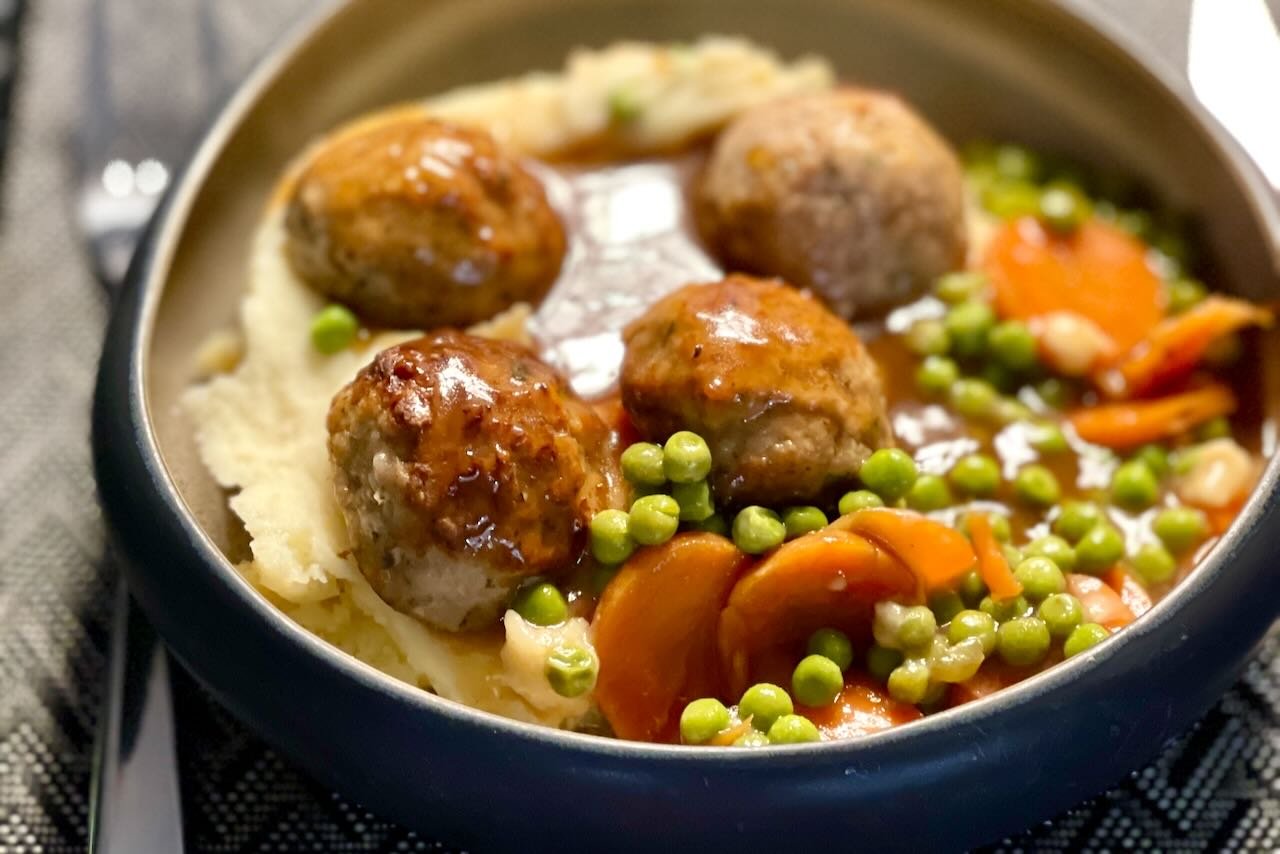
Belgian Meatballs in Liège Syrup Sauce
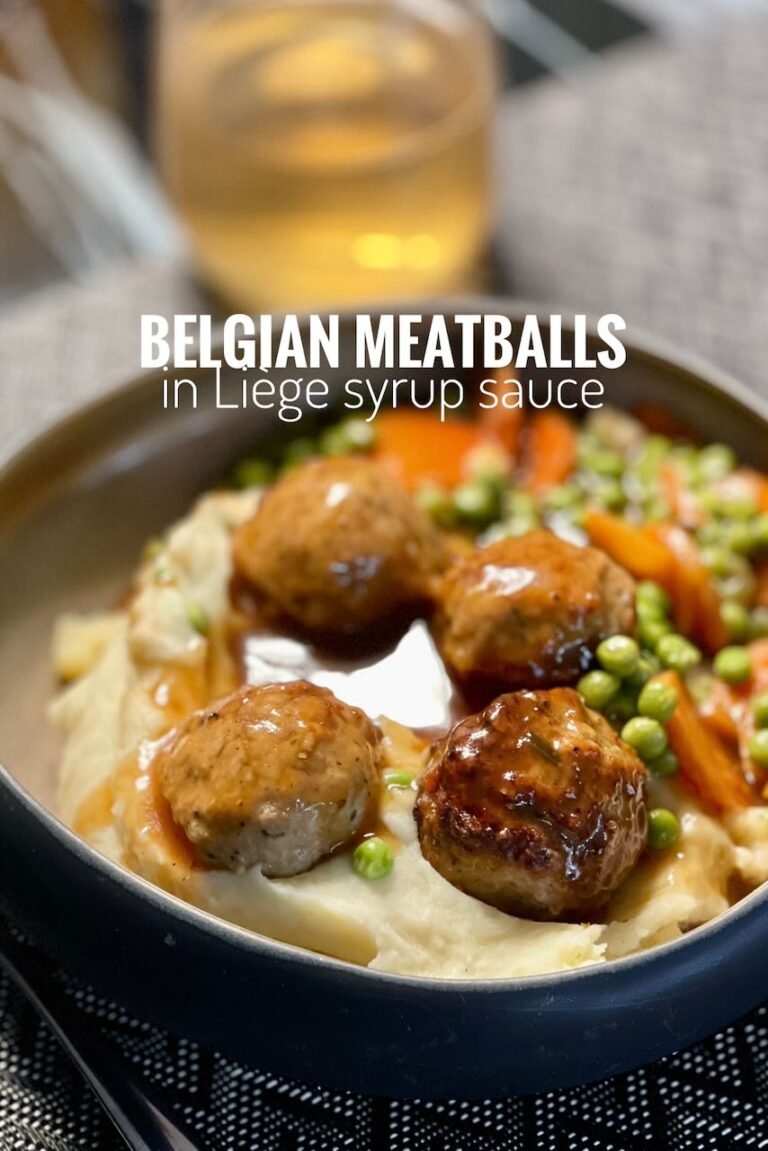
Tender Belgian meatballs in a rich, sweet and sour Liège syrup sauce. A comforting, authentic Belgian classic with deep, fruity flavor.
- 1 lb mixed minced meat beef and pork (600 g)
- 1 small onion very finely chopped
- 1 clove garlic minced
- 1 egg
- 3 to 4 tbsp breadcrumbs
- 1 tbsp mustard
- 1 tbsp parsley chopped
- salt
- pepper
- butter or oil for browning
- 2 onions sliced
- 1 tbsp butter
- 1 tbs brown sugar
- 2 tbsp vinegar apple cider or white wine vinegar
- 2 tbsp mustard
- 4 tbsp sirop de Liège (Liège syrup)
- 1 cup beef stock (240 ml)
- 1 bay leaf
- a splash of beer blond or brown (optional)
1) Mix the minced meat with the onion, garlic, egg, breadcrumbs, mustard, parsley, salt, and pepper.
2) Shape into meatballs. Traditionally, Liège restaurants serve **one or two very large meatballs**, depending on appetite.
3) For weeknight cooking, I keep mine smaller so they brown faster and cook through quickly.
4) Heat butter or oil in a large pan.
5) Brown the meatballs on all sides until they have a nice crust.
6) Remove them from the pan and set aside.
7) In the same pan, melt 1 tbsp butter.
8) Add the sliced onions and cook until soft and lightly caramelised.
9) Sprinkle in the brown sugar and let it melt into the onions.
10) Add the vinegar and scrape up all the browned bits from the pan.
11) Stir in the mustard and Liège syrup.
12) Pour in the beef stock (and beer if using).
13) Add the bay leaf.
14) Stir until the syrup dissolves and the sauce looks glossy.
15) Return the meatballs to the pan.
16) Cover and simmer gently for 25–30 minutes (less if your meatballs are small, longer if they’re traditional large boulets). Stir occasionally and let the sauce thicken naturally.
17) Taste and adjust: more syrup for sweetness, more vinegar for tang, more mustard for depth. The sauce should be sweet‑sour, rich, and velvety.
18) Serve with fries or mashed potatoes.

Why “sauce lapin” has nothing to do with rabbits
Despite the literal translation, Belgian meatballs in – rabbit sauce – there is no rabbit in the sauce, no rabbit served with it, and no historical link to rabbit dishes.
The name comes from something much more charming: it was named after a woman, not an animal.
In the 19th century, a Liège homecook named Madame Géraldine Lapin (yes, her actual surname) is believed to be the inventor of this dish. She became famous for her sweet and sour fruit based sauce (plums mainly) served with large meatballs. So locals started calling it “la sauce de Madame Lapin”, Madame Lapin’s sauce.
Over time, as often happens in regional dialects, the name shortened to simply sauce Lapin.
Yes, once you remove the “Madame”, it suddenly looks like Belgian meatballs in rabbit sauce, even though it has nothing to do with rabbits at all.
Why that name stuck and still exists after all those years?
The surname Lapin was memorable and easy to say. And Belgians love a good culinary in‑joke.
So the name survived, even though the meaning shifted for anyone who didn’t know the story.