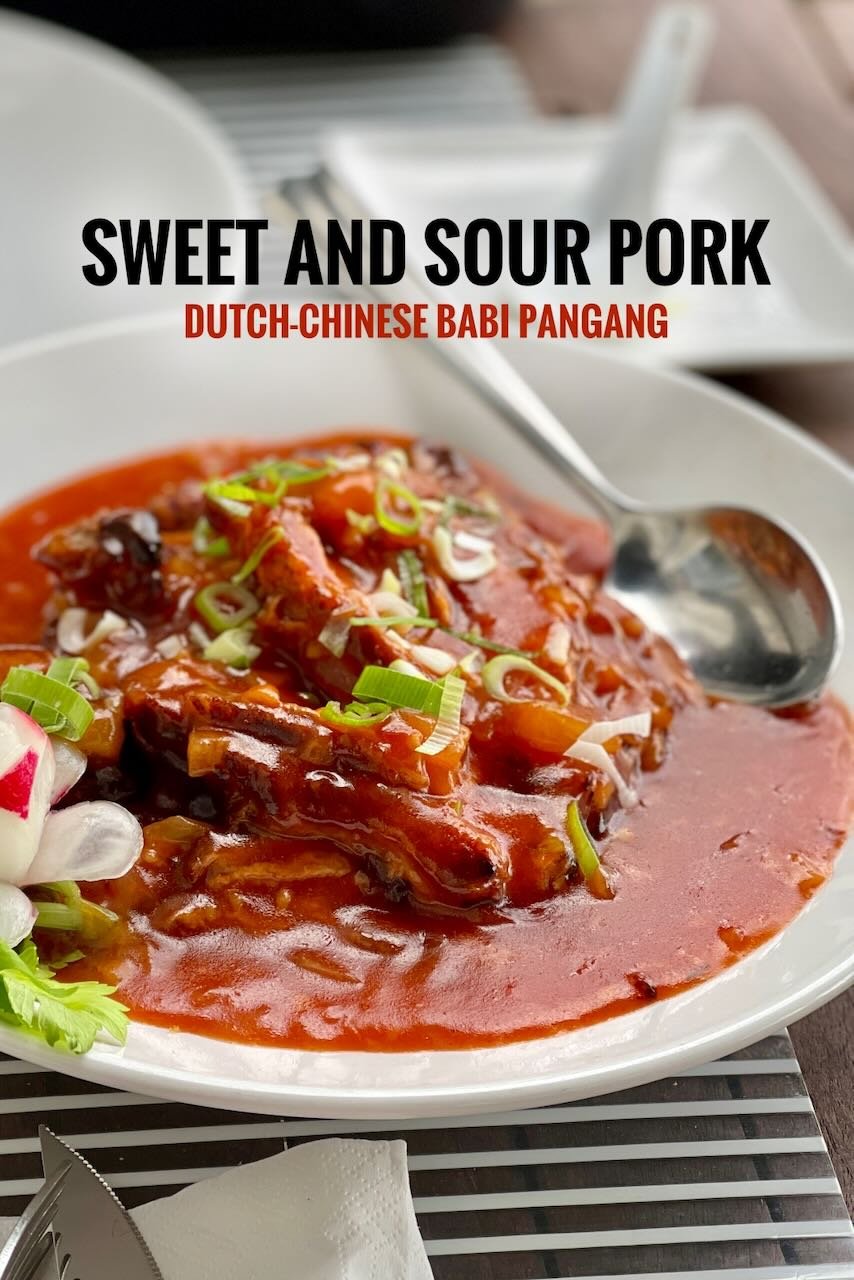
 If you have ever lived in the Netherlands, you already know this dish has main character energy. Babi pangang isn’t just any sweet and sour pork.
It is the crispy, glossy, sweet‑tangy icon of every Dutch‑Chinese restaurant and takeout menu.
The kind of dish that arrives at the table sizzling, smelling like pure nostalgia, and instantly makes everyone at dinner say, “Oh yes, that one.”
My own obsession started right here in Antwerp, at Win’s restaurant, where I ordered sweet and sour pork for the very first time… and then immediately wondered why I hadn’t been eating it my entire life.
Win’s
Their sweet and sour pork version is everything: shatter‑crisp pork, bright red sauce with the perfect sweet and sour balance, just enough heat to keep things interesting. Naturally, I came home determined to reverse‑engineer it — because when a dish hits that hard, you don’t just crave it, you chase it.
So today, we’re making sweet and sour pork — the at‑home version that brings all the Win’s magic straight into your kitchen.
Bold.
Nostalgic.
And wildly satisfying.
And honestly, it’s just fun to cook.
Ready to make your kitchen smell like your favorite Dutch-Chinese takeout spot?
Let’s go.
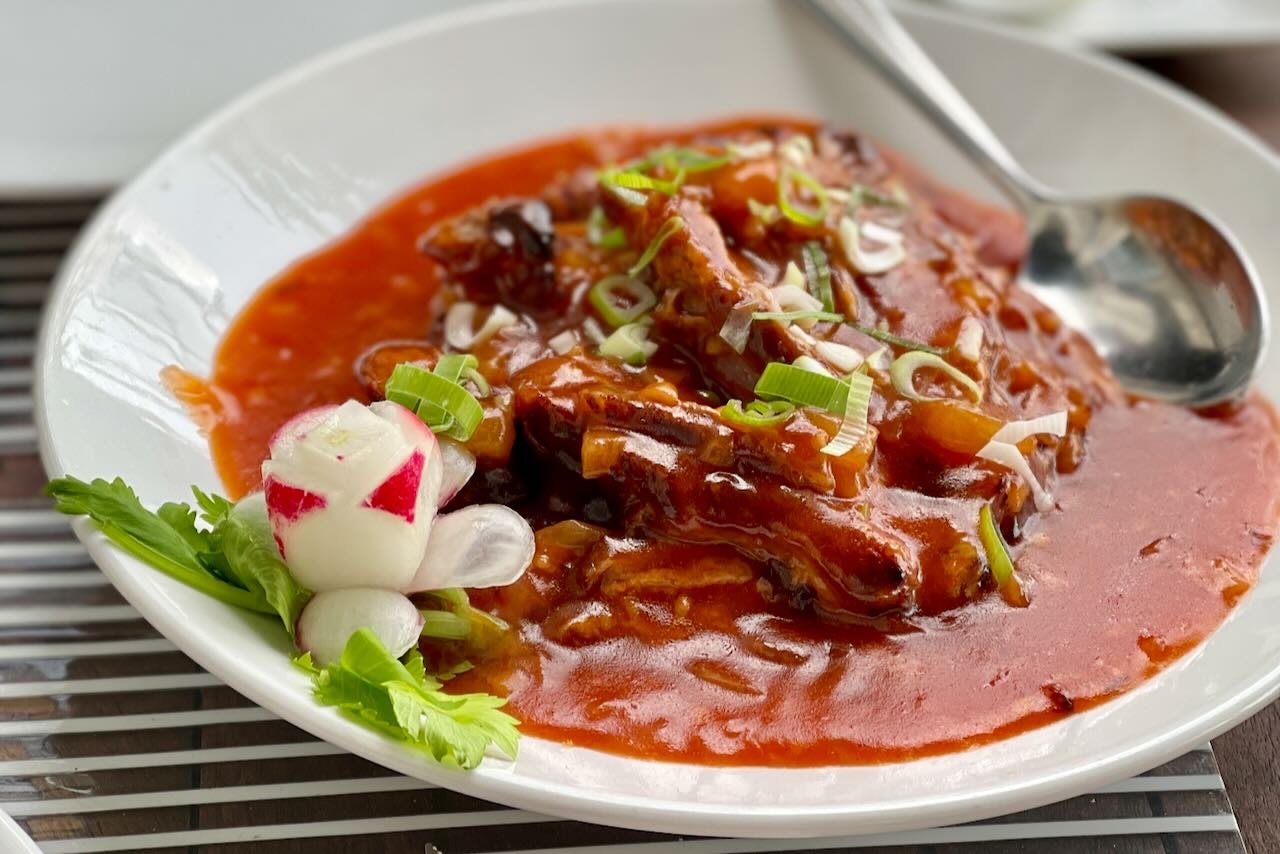
Easy Babi Pangang (Sweet & Sour Dutch‑Chinese Pork)
- 1.5 lbs pork shoulder or pork belly (700 g)
- 2 tbsp soy sauce
- 1 tbsp ketchup
- 1 tbsp honey or brown sugar
- 1 tsp garlic powder
- 1 tsp ginger powder
- neutral oil
- pepper
- salt
- 1 small onion finely chopped
- 2 cloves garlic minced
- 3 tbsp ketchup
- 2 tbsp vinegar white or apple cider
- 2 tbsp sugar
- 1 tbsp soy sauce
- 4/6 cup water (200 ml)
- 1 tsp cornstarch mixed with 1 tbsp water
- a pinch chili flakes for heat (optional)
- 1 drop red food coloring for that classic restaurant look (optional)
1) Mix soy sauce, ketchup, honey, garlic powder, ginger powder, salt, and pepper. Rub it all over the pork and let it sit for at least 30 minutes (or overnight if you’re planning ahead).
2) Preheat your oven to 200°C. Line a baking tray with foil and place a wire rack on top if you have one — it helps the pork crisp up evenly. Lay the marinated pork on the rack (or directly on the tray if needed). Roast for 35–45 minutes, until the edges caramelize and the top looks golden and slightly sticky. If it still looks pale at 30 minutes, give it a little extra time — color equals flavor here.
3) Let the pork rest for 5 minutes, then slice it into thin strips. That’s your babi pangang base, ready for the glossy red sauce.
4) Sauté onion and garlic in a little oil until soft. Add ketchup, vinegar, sugar, soy sauce, and water. Simmer 5 minutes. Stir in the cornstarch slurry to thicken. Taste and adjust: more sugar for sweet, more vinegar for tang. Add chili flakes if you like a little kick.
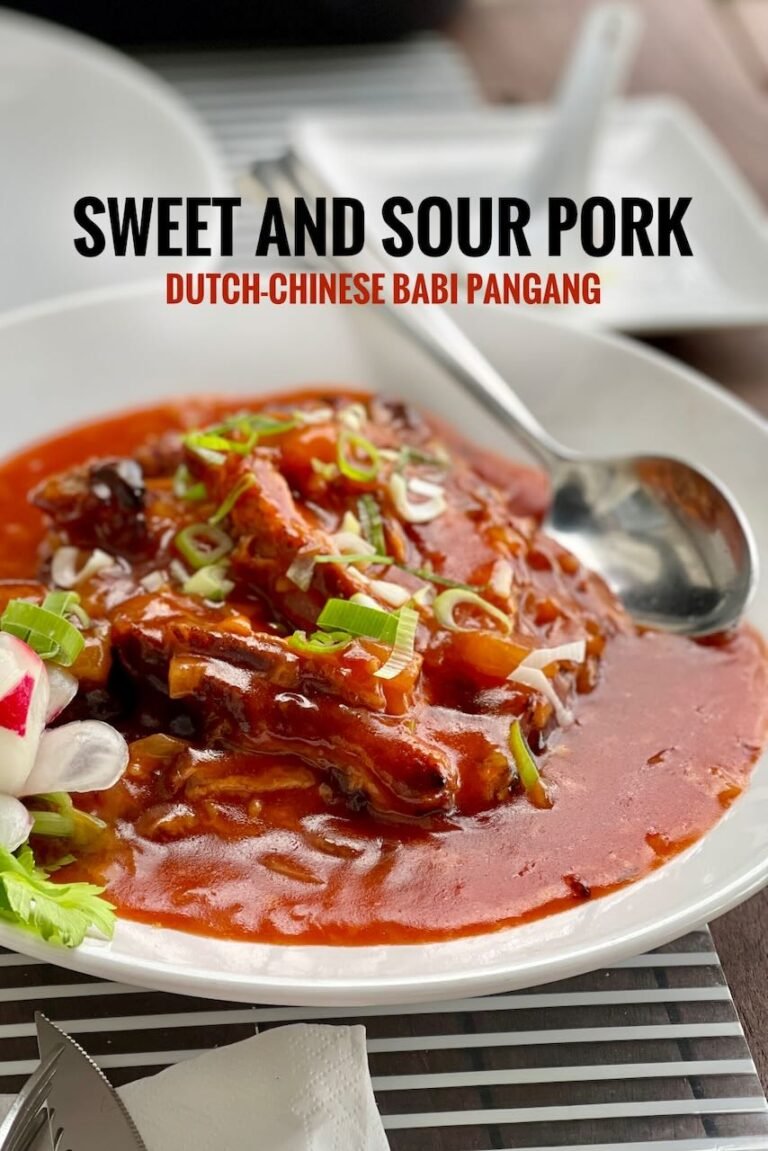
5) Place the sliced pork on a plate and pour the glossy red sauce on top. Serve the sweet and sour pork with rice and sliced cucumber.

Tips (simple + realistic)
- Pork shoulder is cheaper and juicier than pork loin — perfect for this recipe.
- You can also cook the pork in the airfryer — 400°F (200°C) for about 30–35 minutes.
- No ginger powder? Skip it. No garlic powder? Use fresh. This recipe is forgiving.
- Want extra crisp? Pop the sliced pork under the broiler for 3–4 minutes.
- Sauce too thick? Add a splash of water. Too thin? Add a bit more cornstarch slurry.
Origin
Babi pangang (sweet and sour pork) isn’t a traditional Chinese dish, and it is not Indonesian in the way people expect either.
It’s a Chinese‑Indonesian creation that became iconic in the Netherlands. When Chinese immigrants settled in Indonesia (a Dutch colony), they blended their cooking with local flavors. Later, many of those families moved to the Low Countries and opened the “Chinees‑Indische” restaurants everyone here grew up with.
That’s where this sweet and sour pork was born: crispy roasted pork, a bright red sweet‑sour sauce, and a nostalgic flavor profile.