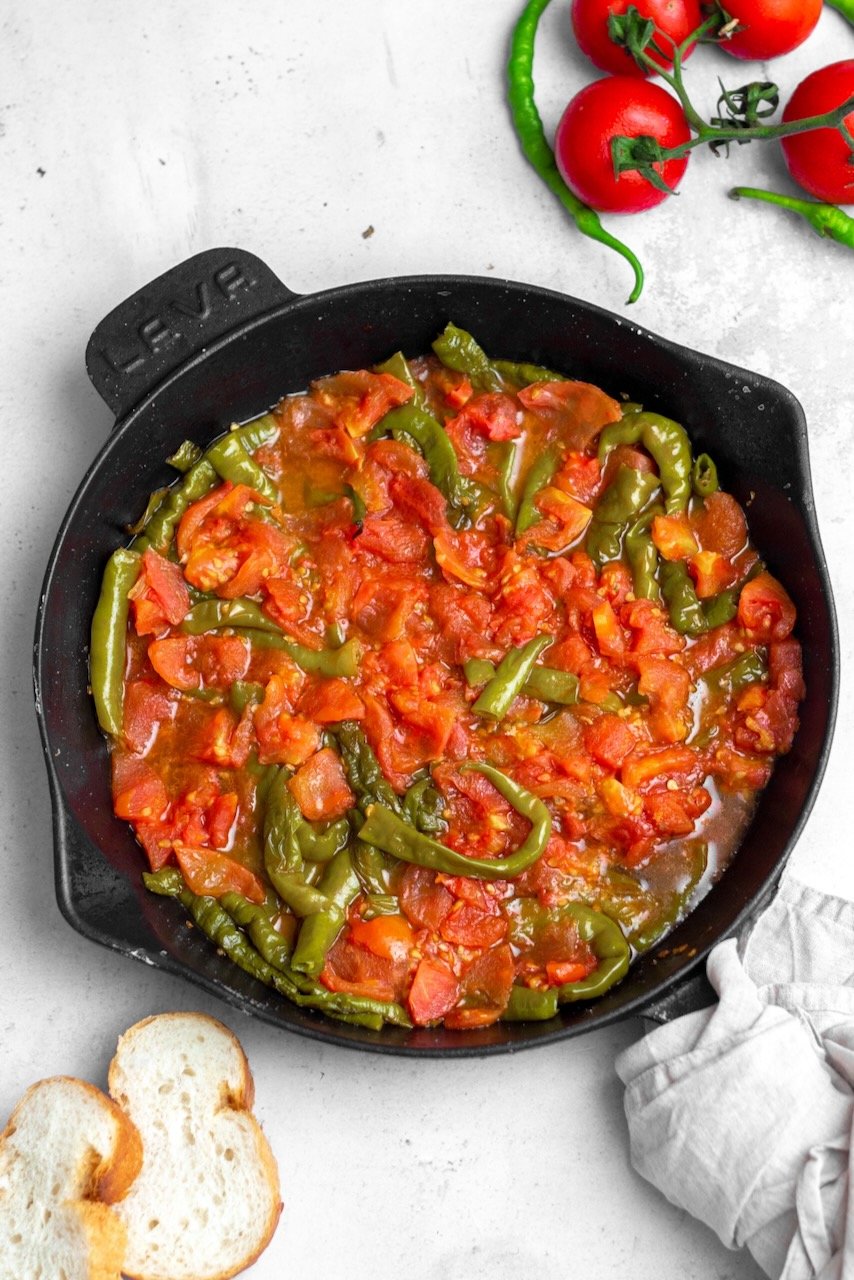
 A vibrant Mediterranean piperrada made with peppers, tomatoes, and olive oil. This rustic skillet dish is perfect warm or cold and pairs beautifully with eggs, fish, or toasted bread.
There’s something irresistible about a pan full of peppers slowly melting into tomatoes, onions, and garlic.
This Mediterranean‑style piperrada is exactly that kind of dish — simple ingredients cooked gently until they turn into a silky, colorful stew that tastes like sunshine. It’s the kind of recipe you make when you want something unfussy but deeply satisfying. A skillet, a handful of vegetables, a splash of vinegar, and a little time on the stove.
That’s it.
Serve it warm with eggs, spoon it over grilled fish, or let it cool and enjoy it as a bright, tangy pepper salad with crusty bread.
Why You’ll Love This Dish
This is the kind of everyday Mediterranean cooking that feels both comforting and fresh.
The peppers soften into something sweet and mellow, the tomatoes bring acidity, and the smoked paprika adds a warm, subtle depth. It’s naturally vegetarian, budget‑friendly, and works with whatever you’re serving — eggs, fish, chicken, or just a slice of toasted sourdough. And because it tastes great warm or cold, it’s the perfect make‑ahead dish for busy days or relaxed weekend lunches.
Enjoy!
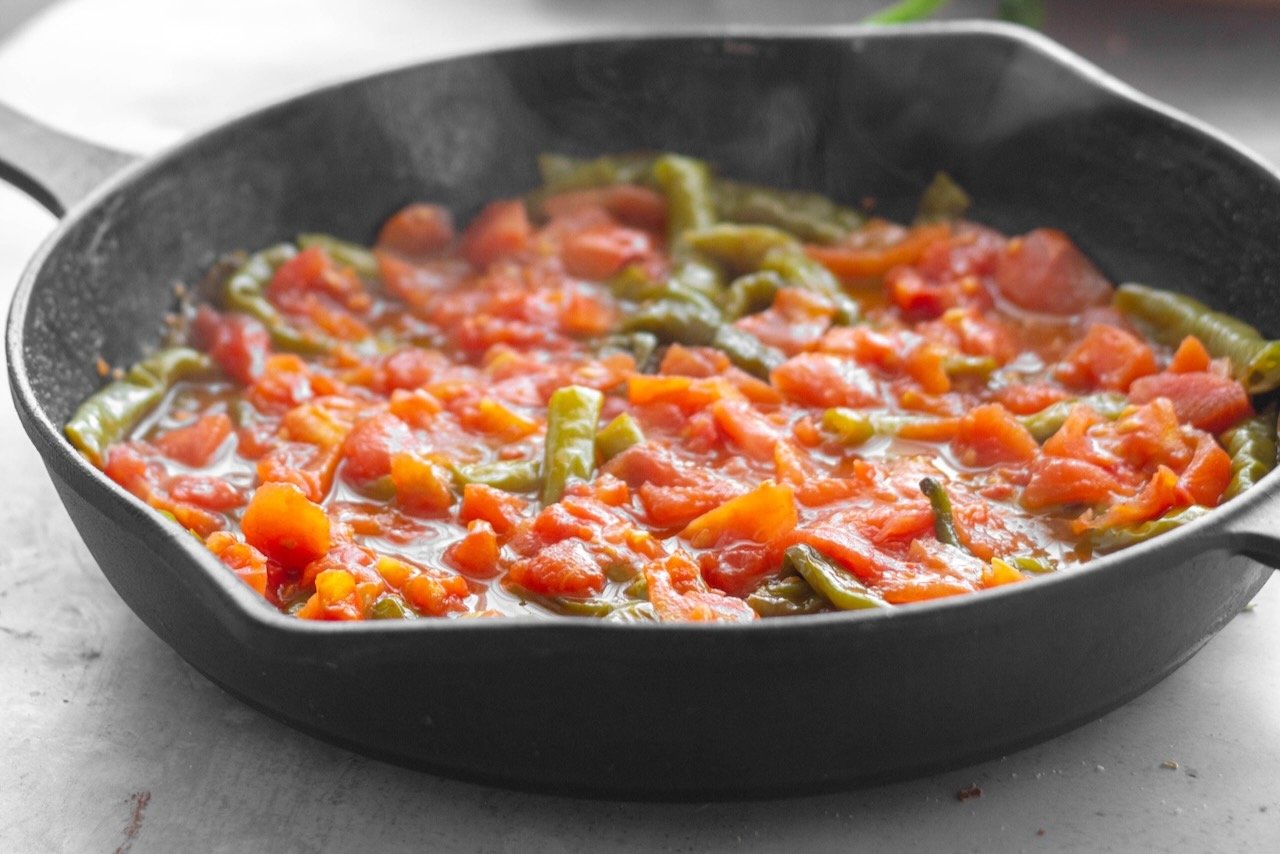
Easy Piperrada (Spanish Pepper and Tomato Stew)
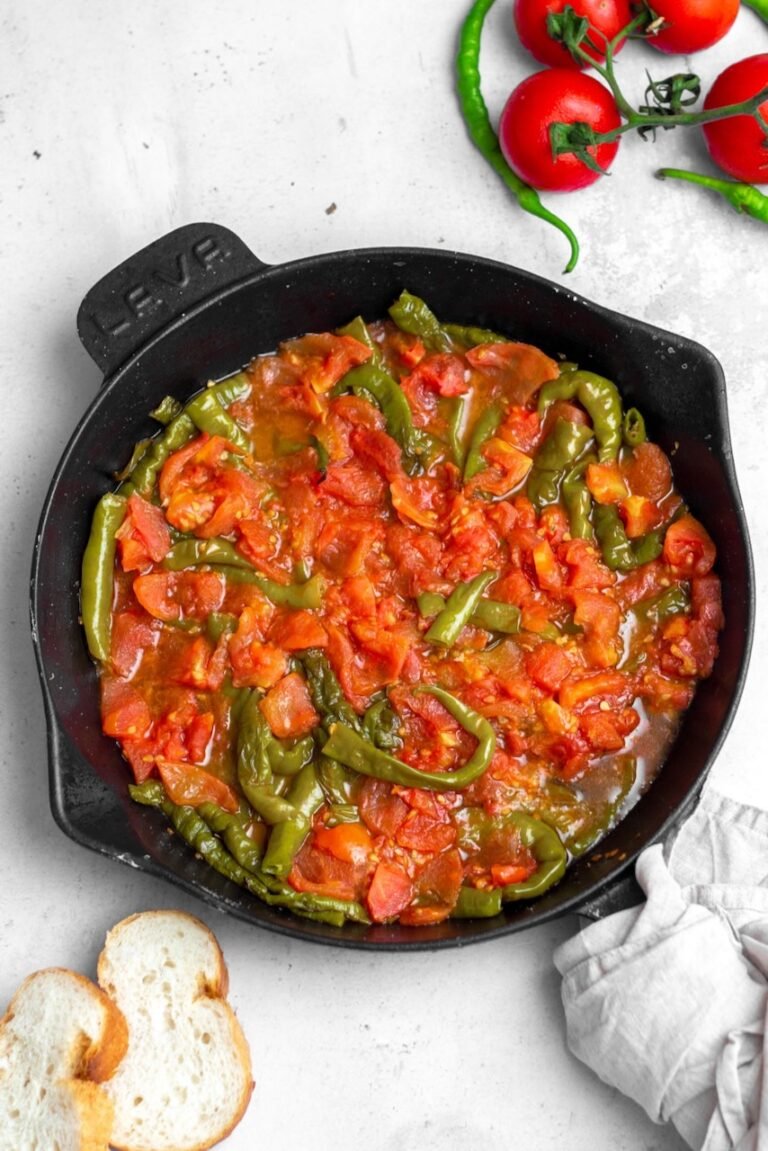
- 3 green (bell) peppers sliced
- 1 large onion sliced
- 3 cloves garlic minced
- 14 oz fresh tomatoes (400 g) chopped
- 1 tsp smoked paprika
- 3 tbsp olive oil
- 2 tbsp red wine vinegar
- a handful fresh parsley chopped
- pepper
- salt
1) Warm a generous splash of olive oil in a large skillet over medium heat.
2) Add the sliced onion and cook until soft and translucent.
3) Stir in the garlic and cook for another minute until fragrant.
4) Add the sliced green peppers and cook until they begin to soften.
5) Add the tomatoes, smoked paprika, salt, and pepper. Stir well.
6) Lower the heat and let the stew simmer gently for about 25 minutes, stirring occasionally, until the peppers are tender and the tomatoes have broken down.
7) Finish with a splash of red wine vinegar and adjust seasoning to taste.
8) Sprinkle with chopped parsley and serve warm — or let it cool and enjoy it as a chilled pepper salad.
Ingredients Explained
- Green bell peppers — the backbone of the dish.
- Tomatoes — canned or fresh; they bring acidity and body.
- Onion & garlic — the aromatic base.
- Smoked paprika — warmth and a hint of smoke.
- Red wine vinegar — brightens everything at the end.
- Parsley — for freshness.
- Olive oil, salt, pepper — the essentials.
Green bell peppers are the backbone of the dish, and they soften into something sweet and mellow as they cook. If you want to learn more about pepper varieties and their flavor differences, this bell pepper overview is a great resource.
How to Serve It
Piperrada is wonderfully versatile.
Spoon it into a skillet and crack in a couple of eggs for a simple brunch, or serve it next to grilled fish for an easy dinner. It’s also great chilled — almost like a pepper salad — especially with crusty bread or toasted sourdough. If you’re cooking for a crowd, set it on the table as a colorful side dish and let everyone help themselves.
Variations & Substitutions
- Swap in red or yellow peppers for a sweeter flavor.
- Add olives for a briny twist.
- Use basil instead of parsley in summer.
- Add chili flakes for heat.
- Stir in tomato paste for a richer base.
For another Mediterranean vegetable dish, you can also try my ratatouille recipe — it has the same slow‑cooked, summery feel.
Storage & Reheating
Piperrada is one of those dishes that actually gets better after a night in the fridge. As the peppers rest, they soften even more, the tomatoes mellow out and the smoked paprika settles into the olive oil. Store the stew in an airtight container and it will keep well for 3 to 4 days.
It also freezes beautifully. Let the piperrada cool completely, then portion it into containers or freezer bags. It will stay in great shape for up to two months. Thaw it overnight in the fridge or gently warm it straight from frozen in a covered pan with a splash of water or olive oil.
Reheating is easy. Warm it slowly on the stove over low heat so the peppers stay tender and the tomatoes don’t break apart too much. A microwave works too — just cover the bowl so it doesn’t dry out.
Don’t forget: piperrada is just as delicious cold. Serve it straight from the fridge as a pepper salad with bread, or spoon it over leftover grilled chicken or fish for a quick lunch.
FAQ
Is piperrada the same as piperade?
They’re very similar, but not identical. Piperade is the French version, usually from the Basque region on the French side of the border, and it often includes eggs or even cured ham folded in at the end. Piperrada leans more Spanish and Mediterranean in flavor — simpler seasoning, more olive oil, and a slightly looser, more rustic texture. At their core, both are pepper‑tomato stews, but the personality of each dish depends on which side of the border you’re cooking from.
Can I make this ahead?
Yes — and honestly, you *should*. Piperrada tastes even better the next day because the peppers soften further and the flavors settle into each other. If you’re planning a brunch or a casual dinner, make it the night before and simply reheat it gently. Or serve it cold straight from the fridge as a pepper salad with bread. It’s one of those dishes that rewards you for being organized.
Can I use fresh tomatoes instead of canned?
Absolutely. Fresh tomatoes give the stew a lighter, brighter flavor, especially in summer when they’re juicy and sweet. Just chop them and cook the stew a little longer so they break down fully. If your tomatoes are very watery, let the stew simmer uncovered for a few extra minutes to concentrate the juices.
What protein works best with it?
Eggs are the classic pairing — either fried on top or poached directly in the stew. But piperrada is also fantastic with fish, especially cod, hake, or tuna. If you prefer chicken, grilled or roasted thighs work beautifully. For a vegetarian option, stir in chickpeas or white beans during the last few minutes of cooking to make it more substantial without losing the Mediterranean feel.
Can I make this spicy?
Yes, but keep it gentle so the sweetness of the peppers still shines. A pinch of chili flakes or a chopped mild chili pepper works well. If you want more heat, add a little at a time — the stew absorbs spice quickly.
What kind of peppers should I use?
Green bell peppers are traditional and give the dish its signature flavor — slightly grassy, slightly bitter, and perfect once softened. But you can mix in red or yellow peppers if you want a sweeter, more colorful result. The stew is forgiving, so use whatever looks best at the market.
How thick should piperrada be?
It should be soft and spoonable, not dry and not soupy. Think of it as a loose vegetable stew that gently holds its shape. If it looks too watery, just simmer it uncovered for a few minutes. If it gets too thick, add a splash of water or a little extra olive oil.
Does it freeze well?
Yes — piperrada freezes beautifully. Let it cool completely, portion it into containers, and freeze for up to two months. When you reheat it, add a splash of water or olive oil to bring it back to life.