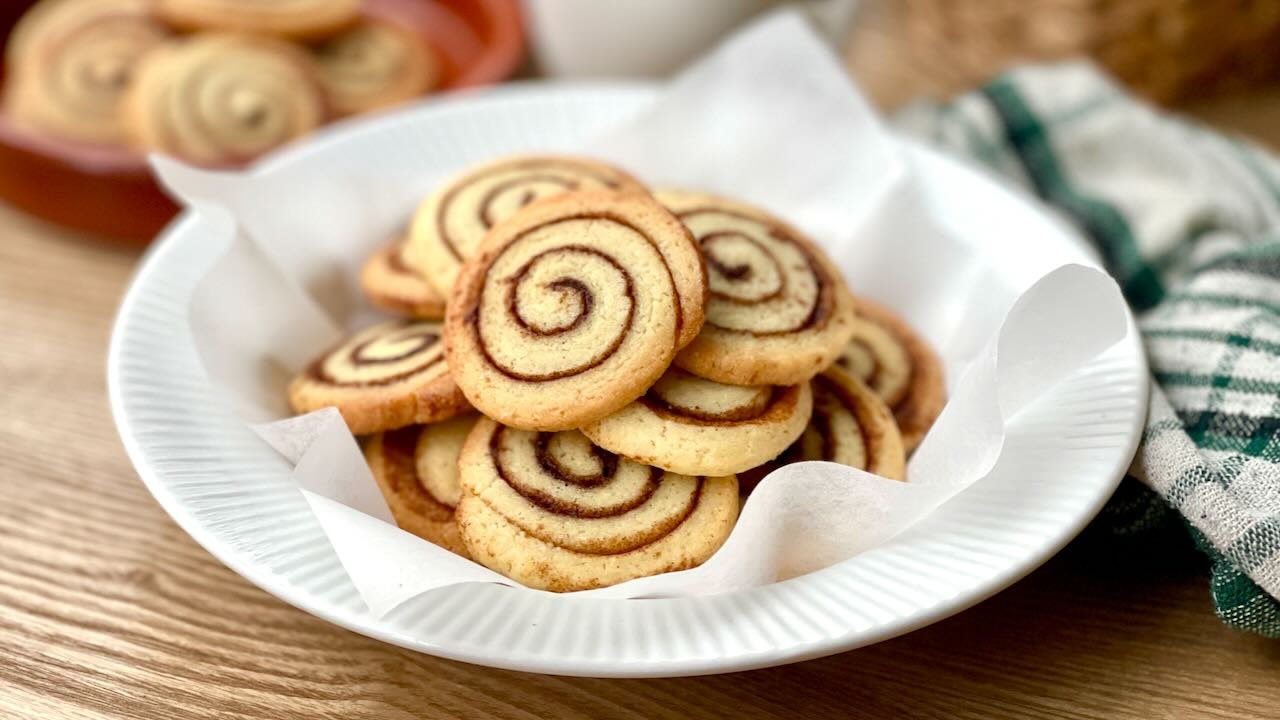
 Crispy cinnamon roll cookies with a caramelised brown cassonade swirl. Belgian‑inspired, buttery, and irresistibly snappy.
There’s something wonderfully rebellious about turning a cinnamon roll into a cookie.
It feels like breaking a tiny baking rule — the kind your grandmother would raise an eyebrow at, but secretly approve of once she tasted it. These cinnamon roll cookies are exactly that: soft, buttery spirals with just enough caramelised sweetness to make you reach for a second one before the first has even cooled.
The twist?
I make mine with brown Candico cassonade from Tiense Suiker. It is the ingredient that quietly transforms these cookies from “oh, that’s nice” to “wait… why do these taste like a Belgian bakery in December?”
Cassonade melts into the cinnamon like velvet, giving the swirl that deep, warm, caramel note you simply don’t get from regular brown sugar. It is nostalgic, it is local, and it makes these cinnamon roll cookies feel like home — even if you are eating them straight off the cooling rack at midnight.
No judgement.
If you love crisp, buttery European biscuits, you’ll also enjoy my Viennese biscuits — another nostalgic favorite.
Enjoy!
Easy Cinnamon Roll Cookies Recipe

Crispy cinnamon roll cookies with a caramelised cassonade swirl. Belgian‑inspired, buttery, and irresistibly snappy.
- 9 oz plain flour (250 g)
- 6 oz unsalted butter (170 g), room temperature soft
- 3 oz caster sugar (85 g)
- 1 medium egg (without shell: 1.75 oz or 50 g), lightly beaten
- salt
- 2 tsp ground cinnamon
- 1 oz brown cassonade (30 g) or brown sugar
-
1) In a large bowl, combine the butter and caster sugar until creamy. Add the egg and a pinch of salt.
-
2) Stir into a buttery mixture. Add the sifted flour.
-
3) Whisk well. You should end up with a smooth dough. Cover it with a piece of plastic wrap and put the dough in the fridge for 15 minutes to chill and set.
-
4) In the meantime combine the cassonade (or brown sugar) and the cinnamon.
-
5) Transfer the dough onto a floured surface and knead it for a minute. Add extra flour if necessary. Roll the dough out gently into a nice rectangle. It should be about ⅕-inch (5 mm) thick. Sprinkle with the sugary cinnamon mixture.
-
6) Carefully start rolling the dough up. If it is too sticky, put it in the fridge again for a couple of minutes. Wrap it up tightly in plastic wrap.
-
7) Put it in the fridge for 30 minutes to chill and set. After that, remove the cling film and cut the dough roll into even slices.
-
8) Place the slices on a baking paper lined baking tray. Bake the cookies in a preheated oven at 356°F (180°C) for 14 to 16 minutes.
-
9) Let the baked cinnamon roll cookies cool down fully before eating or wrapping them up.
About Cassonade (Tiense Suiker) — and What to Use If You Can’t Find It
If you grew up in Belgium, cassonade is practically a pantry heirloom.
The Tiense Suiker version — the one in the soft paper bag that somehow always leaks a little — is famous for its fine, moist texture and deep caramel aroma. Unlike American brown sugar, which is white sugar with added molasses, cassonade is made from beet sugar which behaves slightly differently from cane sugar in baking. It naturally carries a warm, almost toffee‑like flavour. It dissolves beautifully, stays soft forever, and gives baked goods that unmistakable Belgian sweetness: rich but never cloying.
If you’re curious about the science behind it, Britannica has an excellent explanation of the differences between beet and cane sugar.
In these cinnamon roll cookies, cassonade melts into the cinnamon filling and creates a glossy, caramelised swirl that tastes like a cross between a Liège waffle and a warm boterkoekje. It is subtle, but once you taste it, you will understand why Belgian bakers guard their cassonade like treasure.
No cassonade? Best alternatives
1. Light brown sugar (best international swap)
Closest in moisture and sweetness. Add a tiny pinch of molasses or maple syrup if you want more depth.
2. Dark brown sugar
Richer and more intense. Great if you want a deeper caramel swirl, but use sparingly so it doesn’t overpower the cinnamon.
3. Palm sugar (artisanal, warm, slightly smoky)
A beautiful alternative. Grate it finely or melt it with a teaspoon of butter to make a paste. It gives a gorgeous caramel note.
4. Coconut sugar
Less sweet, more earthy. Works well if you like a slightly more rustic, less sugary cookie.
5. White sugar + a drizzle of maple syrup
Not perfect, but in a pinch it gives you moisture + caramel notes.
But if you can get your hands on Tiense Suiker cassonade… do it. Your cinnamon roll cookies will taste like they came straight from a Belgian bakery window.
How to Store Cinnamon Roll Cookies (and Keep Them Crisp)
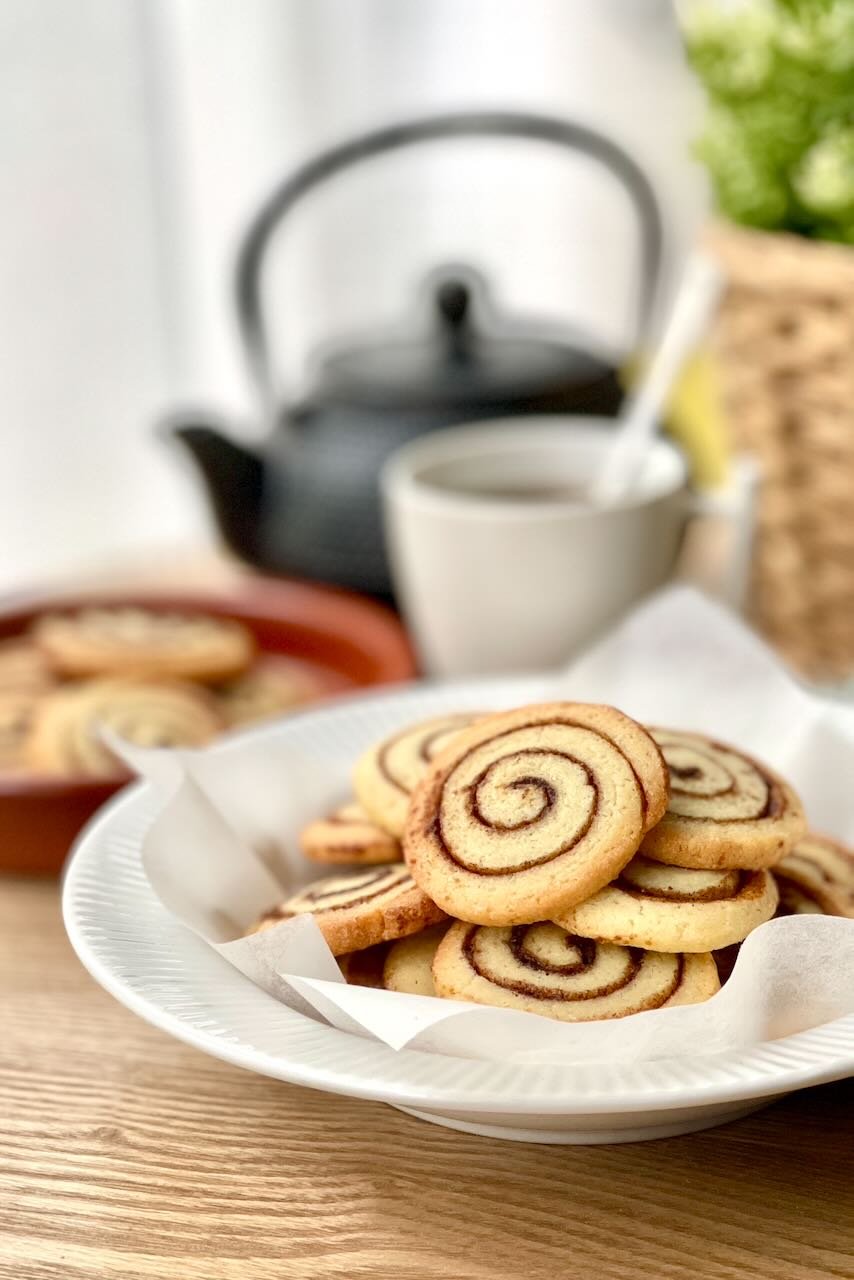
Crisp cookies have one natural enemy: humidity.
To keep your cinnamon roll cookies snappy until tomorrow — or even a few days — here’s the method Belgian bakeries quietly rely on.
Let them cool completely
Even the tiniest bit of warmth creates steam, which softens crisp cookies. Give them time to cool fully on a rack before storing.
Use a metal tin, not plastic
Metal keeps the environment dry, which is exactly what crisp cookies need.
Plastic traps moisture and will soften them overnight.
Add a moisture absorber
Slip in one of these:
– a dry cracker
– a sugar cube
– a small piece of baking paper
– a food‑safe silica packet
They quietly absorb humidity and keep the cookies snappy.
Store at room temperature
Never refrigerate crisp cookies — the fridge makes them soft and stale.
A cool, dry spot on the counter is perfect.
Transporting them
If you are taking them to a friend for a coffee visit:
– keep them in the tin
– add baking paper between layers
– don’t seal the container too tightly during transport
They’ll arrive crisp, fragrant, and looking freshly baked.
If they soften anyway
Pop them into a (250°F) 120°C oven for 3 to 4 minutes, then let them cool completely.
They’ll crisp right back up.
FAQ – Cinnamon Roll Cookies
Can I replace the plain flour with self‑raising flour?
It’s not recommended. Self‑raising flour contains baking powder, which will make the cookies puff and lose their crisp, tight spiral shape. For the classic snappy texture, stick to plain flour. If you only have self‑raising flour, expect a much softer, cakier and expanded result.
Can I make these cinnamon roll cookies ahead of time?
Yes. The dough can be rolled, wrapped, and chilled for up to 24 hours before slicing and baking. You can also freeze the dough log for later.
How do I keep the cookies crisp?
Store them in a metal tin once fully cooled. Add a sugar cube, dry cracker, or piece of baking paper to absorb moisture. Avoid plastic containers — they soften crisp cookies.
Can I freeze the baked cookies?
Absolutely. Freeze them in a single layer, then transfer to a container. To re‑crisp, warm them in a 120°C oven for 3–4 minutes.
What is cassonade, and can I substitute it?
Cassonade is a Belgian beet‑sugar with a soft, caramel‑rich flavour. If you can’t find it, use light brown sugar, or dark brown sugar for a deeper swirl. Palm sugar or coconut sugar also work in a pinch.
Why are my cookies soft instead of crisp?
They may have absorbed moisture while cooling or were stored in plastic. Let them cool completely on a rack and store in a tin. If they soften, re‑crisp them briefly in the oven.
Can I make these with a stand mixer?
Yes. The dough is soft and easy to mix by hand or stand mixer — just make sure the butter is at room temperature.
How thick should I slice the dough?
Aim for 5–7 mm slices. Thinner slices bake crisper; thicker slices stay slightly softer in the centre.
How long do these cinnamon roll cookies stay fresh?
Stored correctly, they stay crisp for 3–4 days. After that, they’re still tasty but lose some snap.